300,000 Alberta separatists sign petition, organization then leaks personal data of 3 million members


/https%3A%2F%2Fcdn-tor.buminteractif.com%2F2026%2F05%2F05211055%2FGettyImages-2224977528.jpg)
The Alberta separatist movement is alive, well, and also apparently criminally unorganized. On May 4, a group called ‘Stay Free Alberta' announced it had received more than 300,000 signatures from Albertans supporting separatism. According to Alberta Premier Danielle Smith, this number is high enough to put the question to a referendum. While 300,000 Albertans voting for separatism is no small share, the signatures aren't the story here. The real story here is about how Alberta's separatist movements betrayed Albertans by purposefully sharing nearly 3 million voters' identities with their members. On April 30, The Centurion Project, an unofficial party supporting Alberta's separatist movements, released a database that included the personal information of nearly 3 million Albertans, or more than half of all eligible Albertan voters.
How did the Centurion Project access the records?
As it is not an official party, The Centurion Project does not have access to voter records, and clearly for good reason. The organization did not acquire these records itself; instead, it used another party to get the data. Elections Alberta provides these data sets for official parties. One of said official parties is the Republican Party of Alberta, a separatist movement created in 2022, then renamed in 2025. As an official party, the Republican Party of Alberta can request these voter records in order to conduct canvassing and door-to-door advertising. If you've ever wondered how a political party knows to knock on your door, this is how. Legal requests submitted to the voting organization.

What is not legal is a political party sharing these data sets with any other organization, especially another political organization. As Elections Alberta has not yet finished its investigation, we don't know how or who transferred the data set from the Republican Party of Alberta to the Centurion Project, but it happened. The Centurian Project was given this data set in full, and it chose to release it publicly to all of its members. On April 30, Alberta Police and agents from Elections Alberta interrupted a Centurion Project meeting, demanding that the database be taken down. Elections Alberta subsequently announced an investigation and informed both the Centurion Project and the Republican Party of Alberta that they had four days to reveal how the information was communicated between organizations.
When was the database made public?
According to Alberta Premier Danielle Smith and Elections Alberta, the database was released sometime around April 10, meaning it was online for at least two weeks before being shut down. What's more, this database was not just a list of names; it was everything. Centurion Project members were given a library of information that was organized and easily searchable. Members could search specific names, addresses, or political ridings. The Centurion Project has unsurprisingly not clarified what the data set was meant to accomplish, but it seems as though members were being encouraged to search databases in order to spread the word of Alberta separatism. By giving members the ability to search through their own ridings to see who is already a supporter, it allows individuals to undertake private, illegal canvassing of neighbourhoods.
Separatist signatures
The organization that collected the 300,000 signatures for Alberta separatism, Stay Free Alberta, claims it is not a part of the data breach. The signatures were collected separately from the Centurion Project and the Republican Party of Alberta, and will reportedly be held to scrutiny. Elections Alberta confirmed that it will be investigating the signatures to ensure that there are no repetitions, but Jeff Rath, the lawyer for the Stay Free Alberta petitioners, claims that their process was “pristine from start to finish.”
“Our process … was pristine from start to finish. Every one of our canvassers was badged and numbered. Every person signing the petition had ID.”
-Jeff Rath
Last year, Danielle Smith reduced the number of signatures required for citizens to bring a constitutional referendum, dropping it from 588,000 to roughly 178,000. The provincial government also changed how citizen-initiated referendums worked, removing powers from Alberta's chief electoral officer. The separatists are hoping the question “Do you agree that the Province of Alberta should cease to be part of Canada and become an independent state?” will be added to a planned referendum in October, which will also include questions on immigration, healthcare and the country's constitution.
History of Alberta Separatism
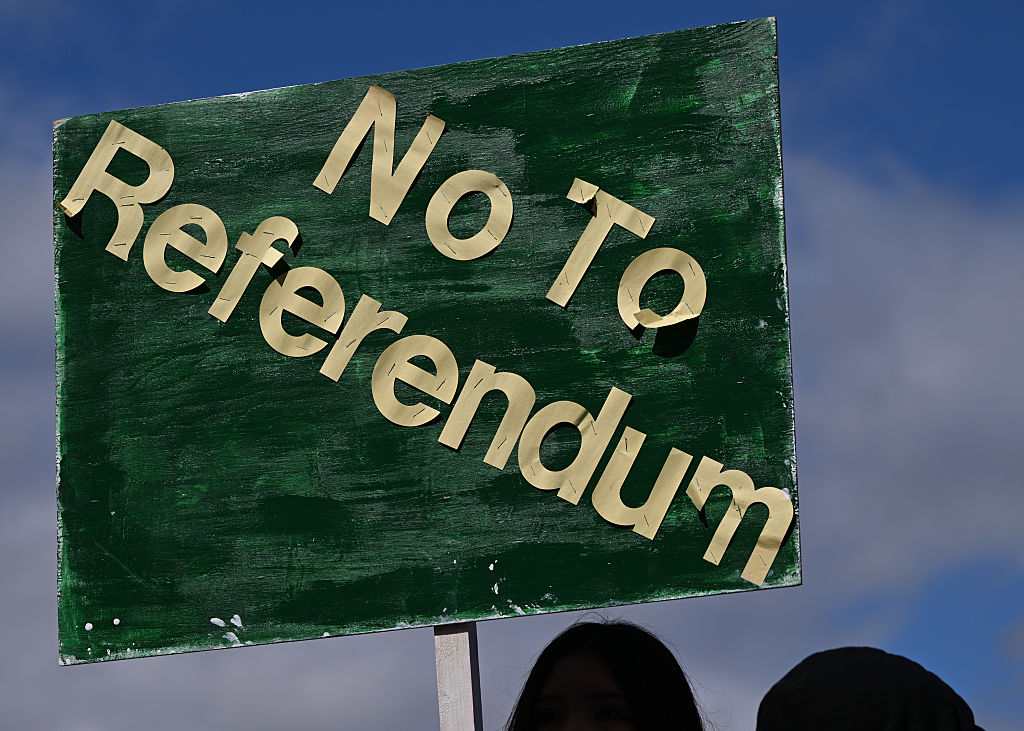
Alberta's separatist movement is not new, and can be traced all the way back to the 1970s. During Prime Minister Pierre Trudeau's tenure, he introduced the National Energy Program, a policy meant to secure energy independence by increasing Canadian ownership of the oil industry to 50 per cent. This meant that oil revenues would be redistributed across Canada, instead of staying in Alberta. The program was widely seen in Alberta as federal overreach into the province's economy. The separatist movement would ebb and flow over the next 30 years, normally flaring up when new pipelines were being planned. The movement took a massive leap in 2015 when Justin Trudeau introduced the infamous carbon tax and tried to shift the focus away from oil and gas and towards renewable energy. Despite receiving consistent support over the last ten years, the Alberta separatist dream has never come close to being realized.