/https%3A%2F%2Fcdn-tor.buminteractif.com%2F2026%2F04%2F28205052%2FGettyImages-2235236837.jpg)
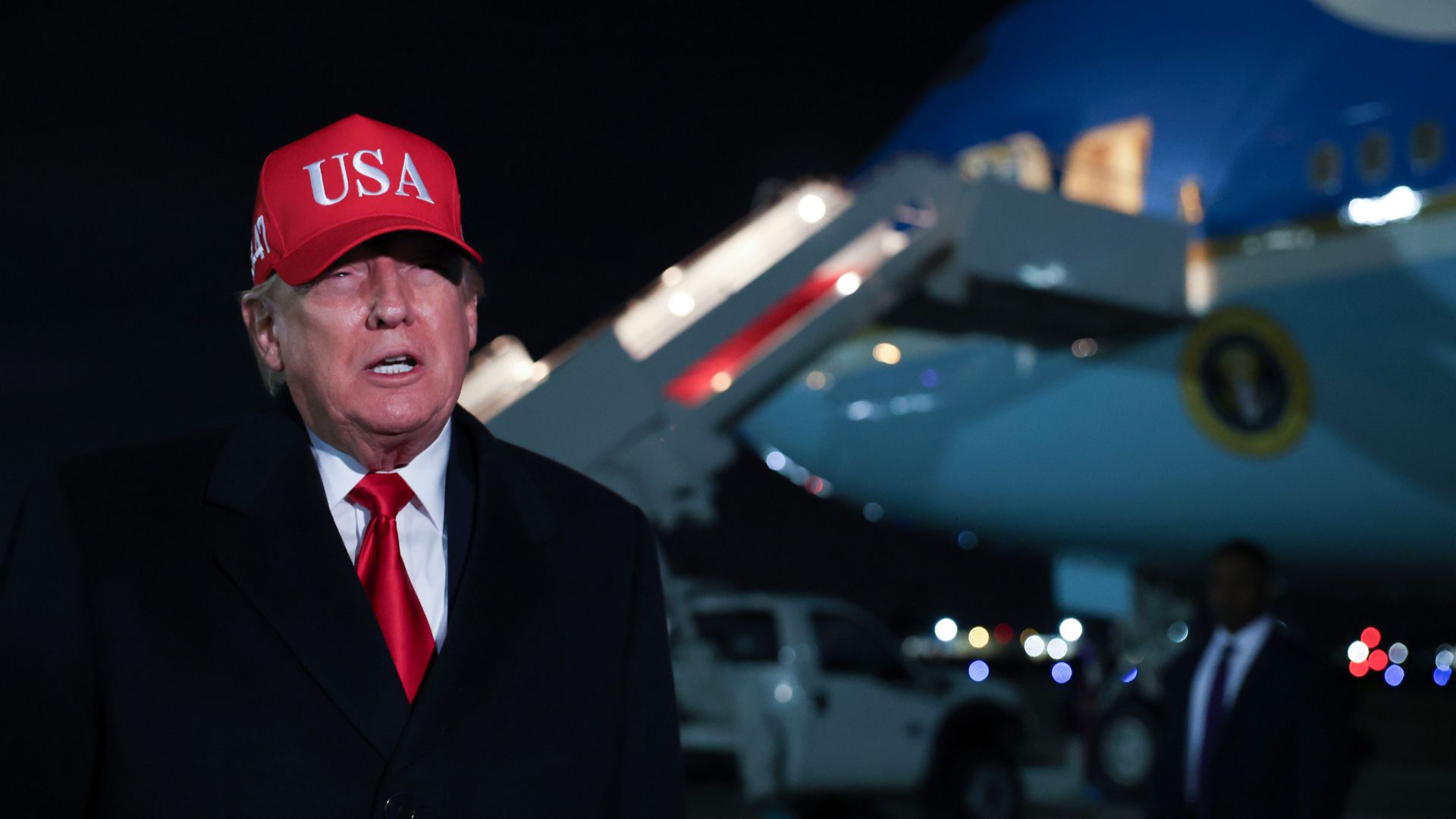
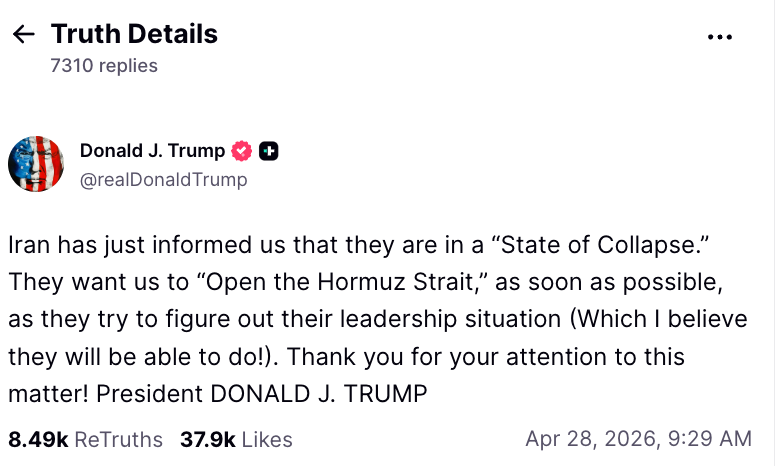
Efforts to end Donald Trump and Israel's War on Iran stalled once again on Tuesday after Trump reportedly rejected a ceasefire proposal from Iran. Iran's proposal failed to include plans to end its nuclear programme until the war has reached a final conclusion. But Trump wants the nuclear programme to be dismantled now, not later. In a post on Truth Social, Trump revealed some of the contents of Iran's message, and Trump's message was impressively positive. Trump claimed that Iran informed him they are in a ‘state of collapse' and that they want the US to open the Strait of Hormuz as Iran finds a new leader.
Since several senior Iranian political and military figures were killed in U.S.-Israeli strikes, Iran no longer has a single, undisputed cleric at the pinnacle of power, which has given Trump solid ground to negotiate terms in his favour. The US killed Ayatollah Ali Khamenei on the first day of war, leading to Trump claiming victory on day one. His son, Mojtaba, was elevated in his place afterwards, and has assembled a hardline cabinet. Many of the Iranian leaders killed by the US were political moderates, fighting for a ceasefire. Many of them have been replaced by hardline conservatives who are pro-war.
«Iran has just informed us that they are in a ‘State of Collapse'. They want us to ‘Open the Hormuz Strait,' as soon as possible, as they try to figure out their leadership situation (Which I believe they will be able to do!).»
-U.S. President, Donald Trump on Truth Social
Iranian Foreign Minister Abbas Araqchi travelled in and out of Islamabad twice during the weekend, meeting with leaders regarding peace talks. According to Reuters, a proposal carried by Araqchi to Islamabad over the weekend envisioned talks in stages. A first stage would require an end to the war, including guarantees that the US cannot restart it afterwards. Negotiators would then resolve the U.S. Navy's blockade of Iran's trade by sea and the blockade of the Strait of Hormuz, which Iran aims to reopen under its control. Only then will Iran be willing to look into negotiations regarding other items, including its nuclear programme. A potential disarming of the programme could look similar to the 2015 nuclear deal between the US and other global powers.
Strait of Hormuz standoff
As of April 28, the US and Iran are engaging in a large-scale Western standoff surrounding the Strait of Hormuz. The small waterway that transports a fifth of the world's oil has been a key pillar of Trump's war on Iran. Earlier in April, Iran had created a blockade in the strait, firing on vessels attempting to pass through in hopes of affecting oil prices in the Western hemisphere. The US responded by creating a blockade of its own with fleets of ships targeting vessels leaving Iranian ports. Iran announced that it would lift its blockade on April 17, but reversed its decision on April 19, firing on multiple vessels passing through the waterway.
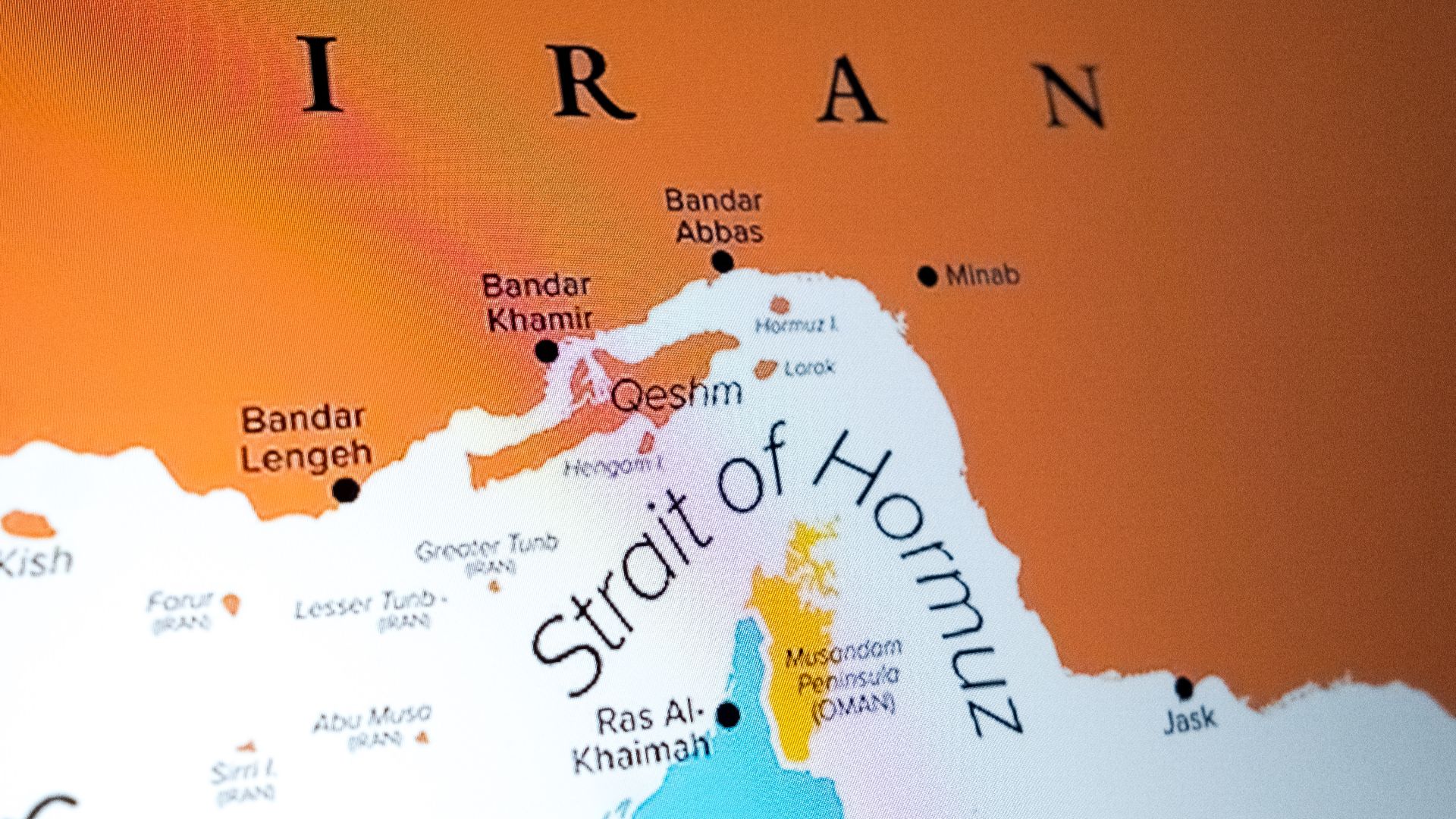
Now, both the US and Iran have a blockade affecting traffic through the Strait, and oil prices will continue to suffer. Since the start of the war, the price of global crude has risen nearly 50 per cent, with American gas prices rising $1.30/gallon, and Canadian gas prices rising 30 cents a litre. Americans are feeling the effects of Trump's war, and the ripples are creating waves in any country that relies on oil imports. Now, electric vehicle sales are skyrocketing in European markets, and with Canada and the US committing to EV factories, Trump's war on Iran is beginning to define the auto industry as a whole.
War on Iran
On February 28, 2026, the US government and Israel undertook a joint operation in Iran, with the US subsequently declaring it was at war with the country. The attacks triggered retaliatory strikes from Iran, targeting US and Israeli military bases across the Middle East. According to Donald Trump, there is no timeline for this war, and the US will continue its operations in the country until it sees a significant regime change, as well as an end to Iran's supposed nuclear program.
US and Israeli strikes killed Iran's Supreme Leader, Ali Khamenei, on Day One of the war, completing Trump's supposed goal. Khamenei has been using deadly violence against civilian protesters in Tehran, and his killing has been the only positive piece of Donald Trump's illegal intervention. Donald Trump changed his reasoning for attacking Iran after Khamenei's death, instead claiming he attacked Iran because he had certain information that Iran was going to attack Israel and the United States. Israel calls the strategy ‘forward defence'. Now, after 51 days of war, both Iran and the US continue to posture and are engaging in a standoff surrounding the Strait of Hormuz. Donald Trump needs to alleviate pressure on oil markets in order to further commit financially to the War, and Iran is trying to balance its own exports while putting pressure on the West. The result has been overwhelmingly negative for all civilians involved.