

/https%3A%2F%2Fcdn-tor.buminteractif.com%2F2026%2F07%2F15151552%2Ftrex-gus-getty-3453gdfgdfg.jpg)
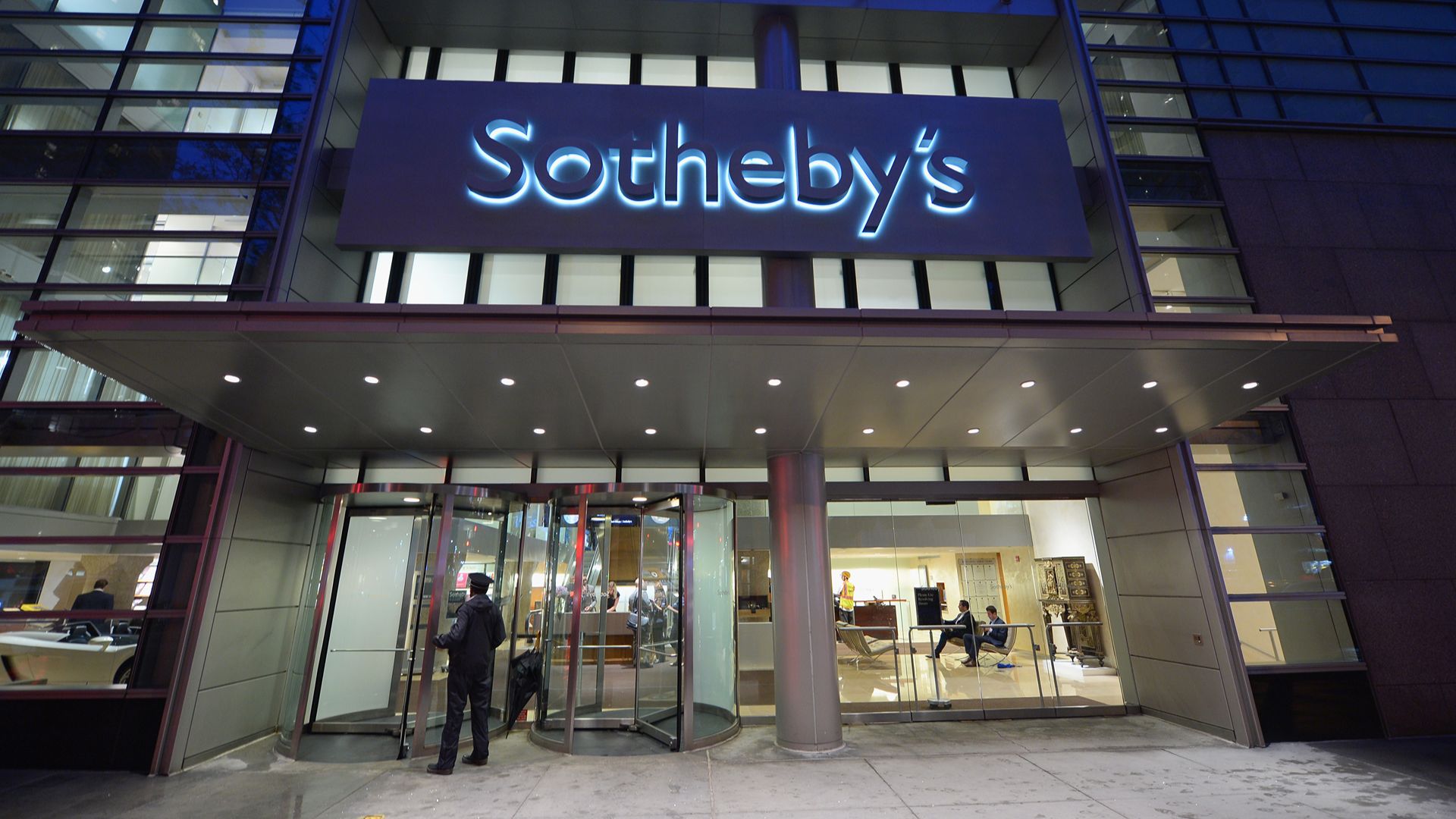
A 67-million-year-old Tyrannosaurus rex known as «Gus» has become the most valuable dinosaur fossil ever sold after fetching an astonishing $50.1 million at Sotheby's in New York on July 14. The sale took place during the auction house's annual «Geek Week» event and followed an intense 10-minute bidding contest that far exceeded pre-sale expectations of $20 million to $30 million. An anonymous buyer participating by telephone ultimately secured the specimen, propelling «Gus» past two previous record holders: «Apex,» the Stegosaurus skeleton that sold for $44.6 million in 2024, and the famous T. rex «Stan,» which brought $31.8 million at auction in 2020. The record-breaking result highlights the rapidly growing demand among wealthy collectors for museum-quality prehistoric fossils, a market that has expanded dramatically over the past decade as exceptionally preserved dinosaur skeletons become increasingly scarce.
The remarkable specimen stands 3.8 metres (12.5 feet) tall and stretches 11.5 metres (38 feet) from head to tail, making it one of the most imposing Tyrannosaurus rex skeletons ever offered at public auction. Although approximately 61% complete by individual bone count, the fossil preserves 183 original skeletal elements and is estimated to retain between 75% and 80% of its total mass, making it one of the most substantial T. rex discoveries ever prepared for private sale. Among its most impressive features are an exceptionally preserved 54-inch skull with a formidable jaw lined with large teeth, two well-preserved feet, a complete pelvis and the rarely preserved furcula, or wishbone. Paleontologists also identified healed fractures and numerous bite marks throughout the skeleton, evidence that the predator survived multiple violent encounters during its lifetime before eventually dying millions of years ago.
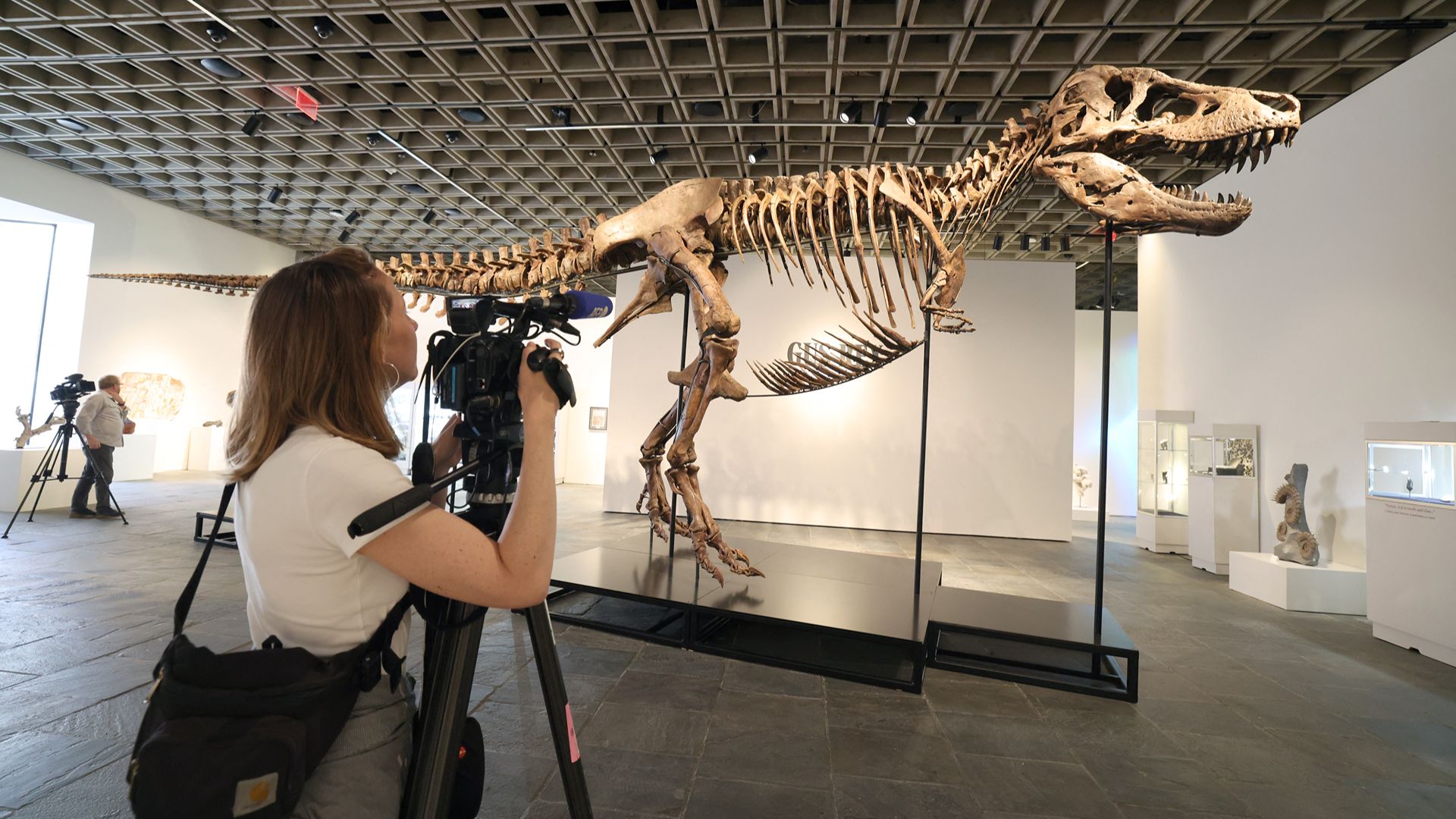
«Gus» was discovered in 2021 within South Dakota's renowned Hell Creek Formation, one of the world's richest sources of Late Cretaceous dinosaur fossils. The excavation took place on a 6,500-acre cattle ranch owned by Gary «Gus» Licking, whose nickname was later given to the dinosaur after he died in 2022 while the excavation was still underway. Commercial paleontologist Thomas Heitkamp and his team spent three field seasons, from 2021 through 2023, carefully uncovering the massive skeleton before beginning another three years of laboratory work dedicated to cleaning, stabilizing, documenting and mounting the specimen. Sotheby's highlighted the exceptional quality of that preparation throughout the auction process. As Cassandra Hatton, Sotheby's vice chair, explained: «Gus is not only an exceptional find, but a specimen that's been excavated, documented, prepared and cared for with real excellence.»
Full ownership rights
Unlike many high-profile dinosaur skeletons that have appeared on the market over the past two decades, «Gus» offers its new owner a unique commercial advantage beyond its scientific significance. The specimen was sold with full ownership rights and does not rely on copyrighted replica bones borrowed from previously discovered Tyrannosaurus rex skeletons. In the fossil industry, missing elements are frequently reconstructed using casts derived from «Stan,» which has become the standard reference specimen for museums and collectors. Because «Gus» was prepared with full rights attached, the anonymous buyer can legally produce, market and license high-quality replicas to museums, educational institutions and private collectors around the world. That additional commercial potential significantly increases the fossil's long-term value, transforming it from a rare prehistoric display piece into an asset capable of generating future revenue through reproduction and exhibition agreements.
«Gus is not only an exceptional find, but a specimen that's been excavated, documented, prepared and cared for with real excellence.»
-Sotheby's vice chair, Cassandra Hatton
The record-breaking sale also underscores the growing debate surrounding the private ownership of scientifically important fossils. Supporters argue that commercial discoveries often rescue remarkable specimens that might otherwise remain buried indefinitely, while auction houses contend that many privately owned dinosaurs are eventually loaned to museums or displayed publicly. Critics, however, worry that multimillion-dollar auctions place irreplaceable fossils beyond the reach of scientific institutions, whose acquisition budgets rarely allow them to compete with wealthy private buyers. As prices continue climbing, paleontologists have increasingly expressed concern that some of the world's most significant prehistoric discoveries could disappear into private collections, limiting opportunities for future research and public education despite the extensive scientific documentation completed before the sale.
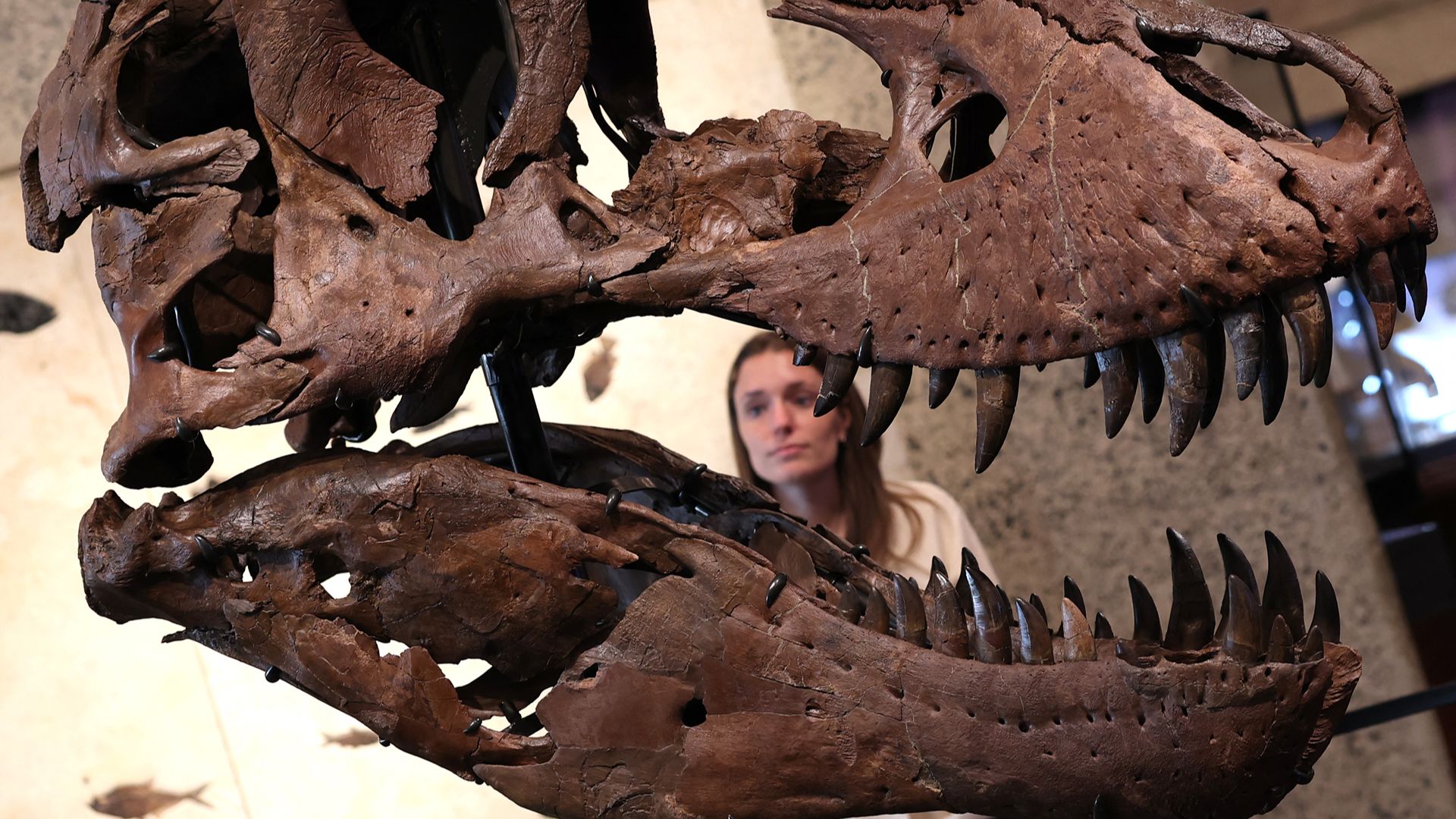
With its $50.1 million price tag, «Gus» has established a new benchmark for the global fossil market, surpassing every dinosaur ever sold at auction. The result eclipses the $44.6 million paid for «Apex» the Stegosaurus in 2024 and the $31.8 million paid for the celebrated Tyrannosaurus rex «Stan» in 2020, illustrating how competition for exceptionally preserved dinosaur skeletons has intensified in recent years. As museum-quality fossils become increasingly scarce and interest from collectors continues to grow, auction specialists believe similar specimens could command even higher prices in the future. For now, however, «Gus» stands alone as the most expensive dinosaur fossil ever sold, marking a historic moment not only for Sotheby's but also for the international market for natural history treasures.
Created by humans, assisted by AI.
 Visit Lionel Messi's magnificent $10.8 million Florida hom
 Elon Musk's SpaceX expands into AI with $60 billion acquisition