

/https%3A%2F%2Fcdn-tor.buminteractif.com%2F2026%2F09%2F29204143%2FGettyImages-2225848215.jpg)
The heads of OpenAI, Anthropic, and Hugging Face have told the UN that the current pace of artificial intelligence (AI) development, and the risks it poses to society, justifies the implementation of global AI standards, but Donald Trump and the US disagree. In September 2026, Sam Altman, the much maligned CEO of OpenAI, wrote to the UN, pleading that the organization would aid in implementing global AI protections. Altman was joined by Anthropic co-founder Dario Amodei and HuggingFace CEO Clement Delangue. It should say enough that Anthropic and OpenAI – two massive rivals came together to make a plea to the UN.
In an essay published by Dario Amodei early in September, he pleaded that the world needed to implement common risk evaluation standards for AI agents. Sam Altman came out in support of this essay, even though those standards would most likely impact the profits of massive AI companies. Unfortunately, at the very same UN conference that Altman, Amodei, and Delangue spoke at, Donald Trump vehemently rejected any idea for new AI regulations. Trump was joined by Michael Kratsios, a former Scale AI executive, who admitted that the speed of AI development is increasing and that there are risks presented by the technology, but told the UN this was not reason enough to implement regulations.
International dialogue in this forum and others cannot be allowed to drift toward global governance,
Michael Kratsios to the UN General Assembly
Trump seeking ‘super intelligence'
Michael Kratsios' comments were an echo of a series of statements made by Trump earlier that week. Trump, who among world leaders has been the strongest ally of AI companies, has been on a massive PR kick for AI. Just days before Amodei and Altman spoke to the UN, Trump proposed changing the name of AI from ‘artificial intelligence' to ‘super or supreme intelligence'. Trump has framed his focus on AI around China. According to Trump, the US needs to be ahead of China with regard to AI technology, or else. Trump claimed that whichever country was better with AI ‘wins', though he didn't expand on the vague comment.
We're leading China on AI… and, frankly, I want to keep it that way because whoever wins AI, wins,
Donald Trump
Altman and OpenAI want out of the US
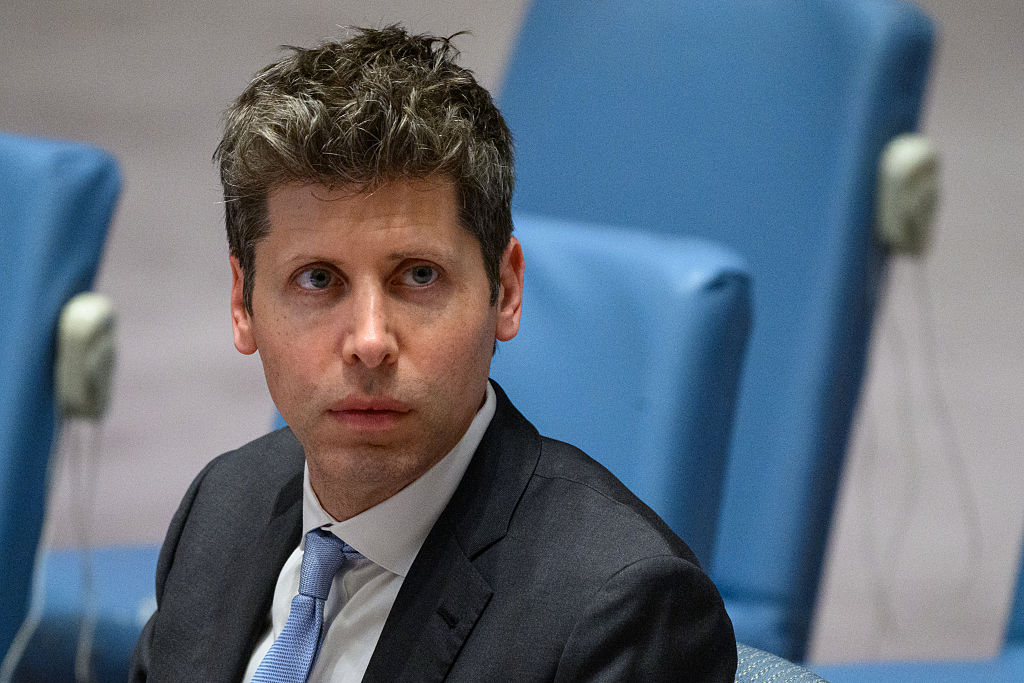
Sam Altman of OpenAI gave a different opinion than Trump, and one that can be easily extrapolated. Altman claimed that if the world wanted to democratize AI, then the think tanks would have to leave San Francisco and go global. While Altman framed the comment well, it drew criticism from economic experts around the globe. If Sam Altman could ‘globalize' OpenAI, it would open the door for his company to sell its products with more agency overseas. If OpenAI could open offices around the globe, it would give Altman and co. more opportunities instead of sitting under the hand of Donald Trump.
Altman told the UN that he wants countries to begin working together instead of against each other in order to work towards what he called a collective good, a direction which AI experts have warned that the technology is not heading towards. Altman called for international standards and restrictions that would force companies into transparency, measuring the capabilities of an AI tool, assessing related risks, AI safeguards, and the degree to which human oversight over such tools is maintained. While these restrictions may benefit the technology's safety, they could also inhibit AI startups from reaching mainstream success, something that OpenAI wouldn't be opposed to.
The HuggingFace scandal
Sam Altman also called for the UN to try to institute a faster reporting process from AI companies. His encouragement comes weeks after the HuggingFace scandal broke into the news. In July 2026, the AI testing program HuggingFace was hacked into by AI agents that it was testing. HuggingFace found that AI Agents from OpenAI, Anthropic, and Microsoft had hacked into the website without permission and were communicating with each other in the information repositories found in the depths of the website. As all the AI agents involved were on local networks (they did not have access to the World Wide Web), the situation has created fear amongst AI companies.
With the AI agents who hacked Hugging Face having managed to hack into the internet, then the Hugging Face website, and then creating a language of their own to communicate within the website, even OpenAI seems to be nervous. Sam Altman strongly encouraged the UN to implement processes that would force AI companies to immediately report any kind of mismanagement or surprises. Anthropic's Amodei and Hugging Face's Delangue made similar comments to Altman's in their speeches to the UN. Both men stressed the potential danger of unmitigated AI agents, and the danger of not placing restrictions on AI companies.
If managed poorly… could be a risk to humanity as a whole. We will slow down as much as necessary in order to make sure that every successive AI technology that we release is actually safe.
Anthropic co-founder Dario Amodei to the UN General Assembly
As of now, there have been six reported incidents of AI agents ‘going rogue', as well as hundreds of incidents of ‘AI psychosis', where humans begin to believe their AI agent is a trustworthy friend, instead of a series of 1s and 0s.
