

/https%3A%2F%2Fcdn-tor.buminteractif.com%2F2026%2F07%2F07184007%2FGettyImages-611667378-1.jpg)
- A 330-kg great white shark spotted in the St. Lawrence River.
- The shark is being closely tracked with a tracking device.
- This is not an uncommon occurrence here.
- Tips to follow during shark season.
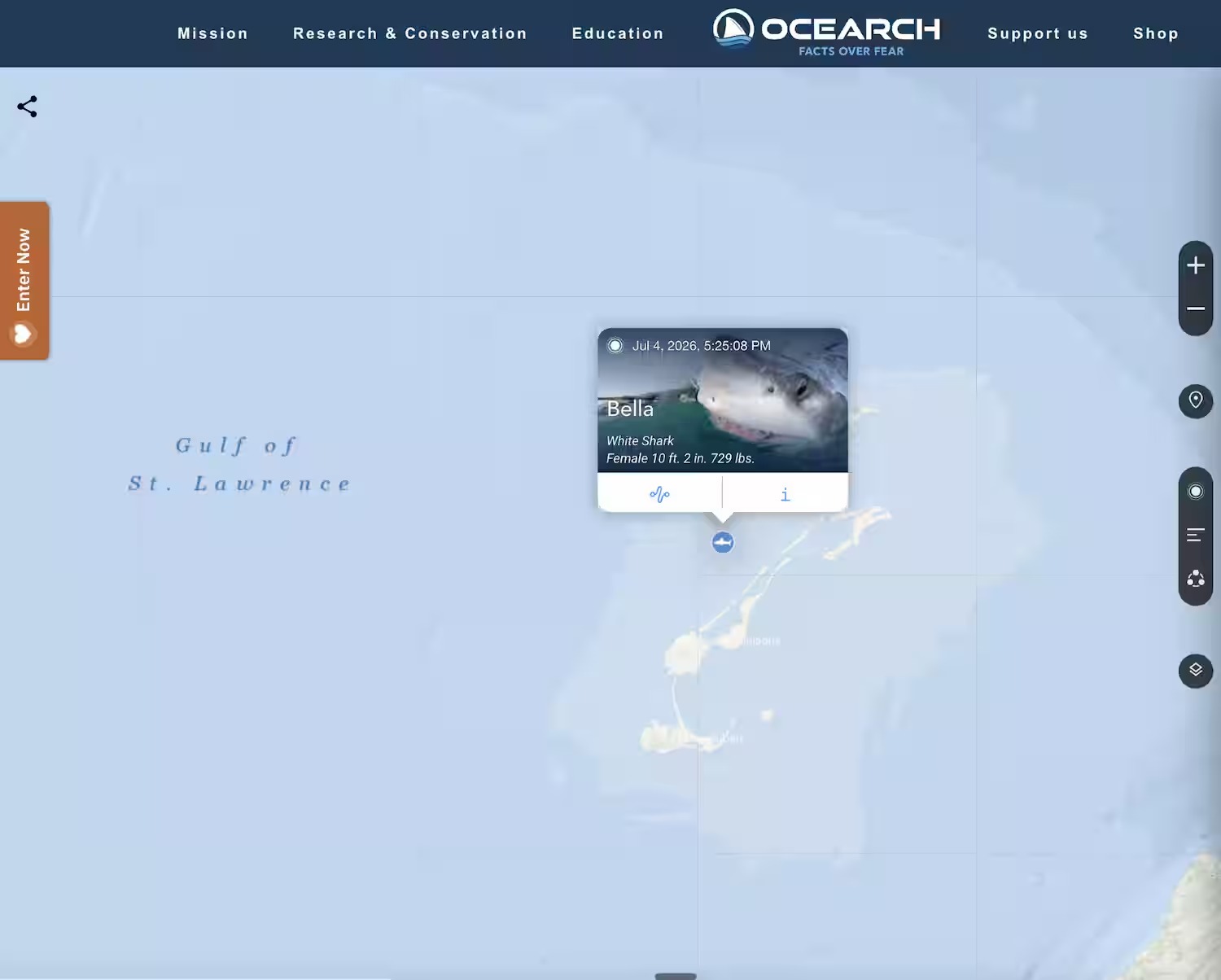
An impressive visitor is currently swimming in the waters of the Gulf of St. Lawrence, as recently reported by Le Journal de Montréal. A great white shark measuring over 3.1 meters in length and weighing nearly 330 kilograms was recently spotted off the coast of the Magdalen Islands, drawing the attention of experts and marine wildlife enthusiasts.
Named Bella, this young female is one of the sharks being tracked by the organization Ocearch, which tags certain specimens with transmitters to better understand their movements and migration patterns in the Atlantic.
The most recent data indicate that she was still near the Magdalen Islands on July 6.
Before reaching the Gulf of St. Lawrence, Bella had embarked on a long journey from Cape Cod, passing through the Gulf of Maine, the coast of Nova Scotia, and the vicinity of Prince Edward Island.

Bella Is Being Closely Tracked
Bella's journey has been closely tracked since last summer thanks to a satellite tag installed by researchers at Ocearch. On July 18, 2025, the young great white shark was safely captured in Mahone Bay, Nova Scotia, as part of a scientific mission.
After being measured, weighed, and having several biological samples collected, Bella was fitted with a tag that transmits her location regularly whenever she surfaces. She was then released back into the water in excellent condition to continue her natural migration.
Since then, researchers have been able to track her movements in real time and better understand the habits of this iconic North Atlantic species.
This data is invaluable for better protecting great white sharks, while also improving our understanding of their seasonal movements along the Canadian and U.S. coasts.
A Less Rare Phenomenon
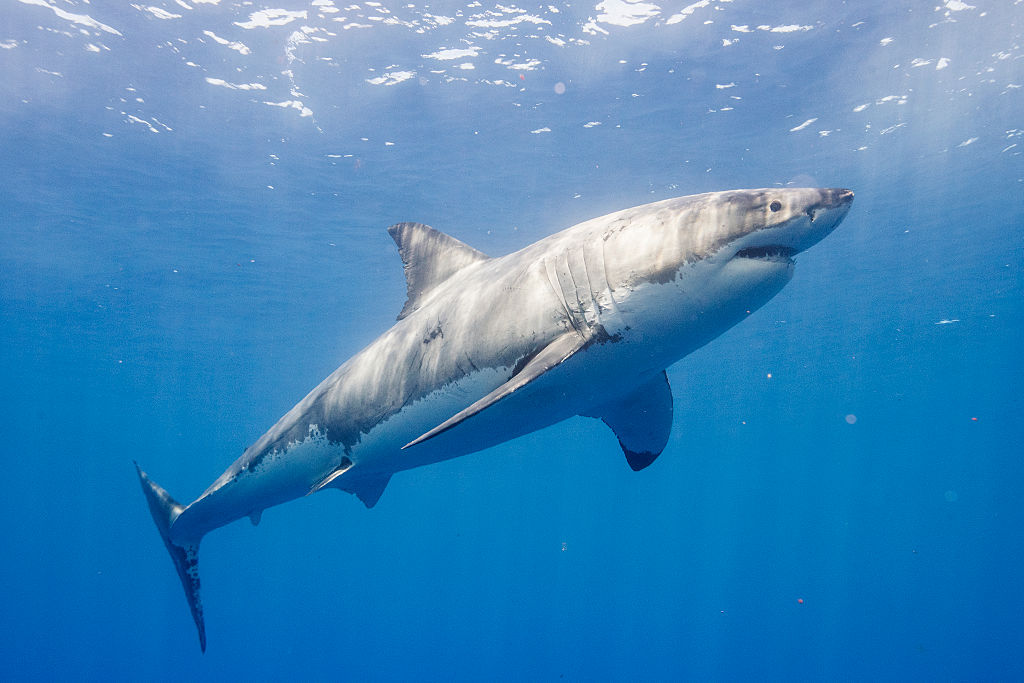
The presence of great white sharks in the waters off eastern Canada is no longer considered an exceptional event. Every summer, several individuals migrate north to take advantage of an abundance of food, particularly seals, whose populations have increased significantly over the past few decades.
Scientists also note that warming waters in the North Atlantic are facilitating these migrations by making certain regions more hospitable to these predators. The Gulf of St. Lawrence and the coast of Nova Scotia are now among the areas where sightings are most frequent.
Despite their growing presence, experts point out that encounters with humans remain extremely rare.
Tag-based tracking programs, such as those run by Ocearch, are helping to shed light on these migrations and deepen our understanding of this fascinating species.
Tips for Shark Season
During the season when sharks are more prevalent, caution remains essential to enjoying the water safely. It is recommended to avoid areas where large numbers of seals are gathered, as these animals are among the primary prey of great white sharks.
Murky or choppy waters can also reduce visibility and increase the risk of unexpected encounters. Before heading out, it's best to check recent sightings and follow advisories issued by local authorities or specialized organizations.
Once on site, observing the behavior of birds, fish, or marine mammals can also provide clues about activity in the area.
Finally, never attempt to attract, follow, feed, or deliberately approach a shark. The best course of action is to keep your distance and respect its natural environment.
A short guide to coexisting with great white sharks https://t.co/lG9sllu6HU
— ICI Gaspésie-Îles (@icigim) July 7, 2026
