

/https%3A%2F%2Fcdn-tor.buminteractif.com%2F2026%2F07%2F03150307%2Ffrance-getty-43534gdfgd34234.jpg)
The country's deadly heatwave has transformed portable air conditioners from a niche household appliance into one of the most sought-after products in France. Across the country, videos posted on X, TikTok and other social media platforms captured crowds storming discount retailers moments after their doors opened, with customers pushing, shouting and fighting over the limited number of cooling units available. Some stores reportedly required police intervention after altercations broke out, while others saw shelves emptied in less than a minute. Lidl, Action and other retailers became the center of the nationwide scramble after offering portable air conditioners at heavily discounted prices that were hundreds of euros cheaper than competing models. In several locations around Paris and other French cities, shoppers waited in line for hours before opening only to discover that supplies had already been exhausted, leaving many families empty-handed as another dangerous round of extreme heat approached.
The buying frenzy reflects a much deeper problem unfolding across Europe. Unlike North America, where nearly nine out of ten households have some form of air conditioning, only about 20% of European homes are equipped with cooling systems, leaving millions exposed as temperatures continue reaching unprecedented levels. France has historically resisted widespread air conditioning because of environmental concerns, high electricity consumption and architectural traditions favoring thick stone buildings designed to retain cool air naturally. That approach is now being challenged by a continent warming faster than any other. The International Energy Agency has reported rapidly growing demand for cooling equipment across France, Spain and Italy, while manufacturers including Samsung, Mitsubishi Electric and Midea have experienced double-digit sales growth this year as consumers rush to adapt to increasingly frequent and prolonged heatwaves. Used portable air conditioners have even begun selling above the price of new models in some markets because retailers cannot replenish inventory quickly enough.
«Heatwaves are no longer freak weather anomalies. They are now a recurring crisis inflicting suffering, claiming lives and fracturing our health systems and infrastructure.»
-WHO Regional Director, Dr. Hans Henri P. Kluge
Behind the chaotic shopping scenes lies one of Europe's deadliest climate emergencies in recent years. The persistent Omega Block weather pattern trapped scorching air over western Europe for days, allowing temperatures to climb well above seasonal norms while preventing cooler Atlantic air from reaching the region. France recorded its hottest June since national records began, with temperatures averaging nearly four degrees Celsius above normal and more than 40% of mainland France experiencing temperatures above 40°C. Public Health France reported that deaths surged by 29.1% during the hottest week of the heatwave, corresponding to 2,025 additional deaths compared with the previous week, while officials warned the figure remains an underestimate and is expected to increase as additional data becomes available. Reuters also reported approximately 3,700 excess deaths across France, Belgium and the Netherlands linked to the prolonged heatwave, underscoring the devastating human cost of a climate event that experts say is becoming increasingly common across Europe.
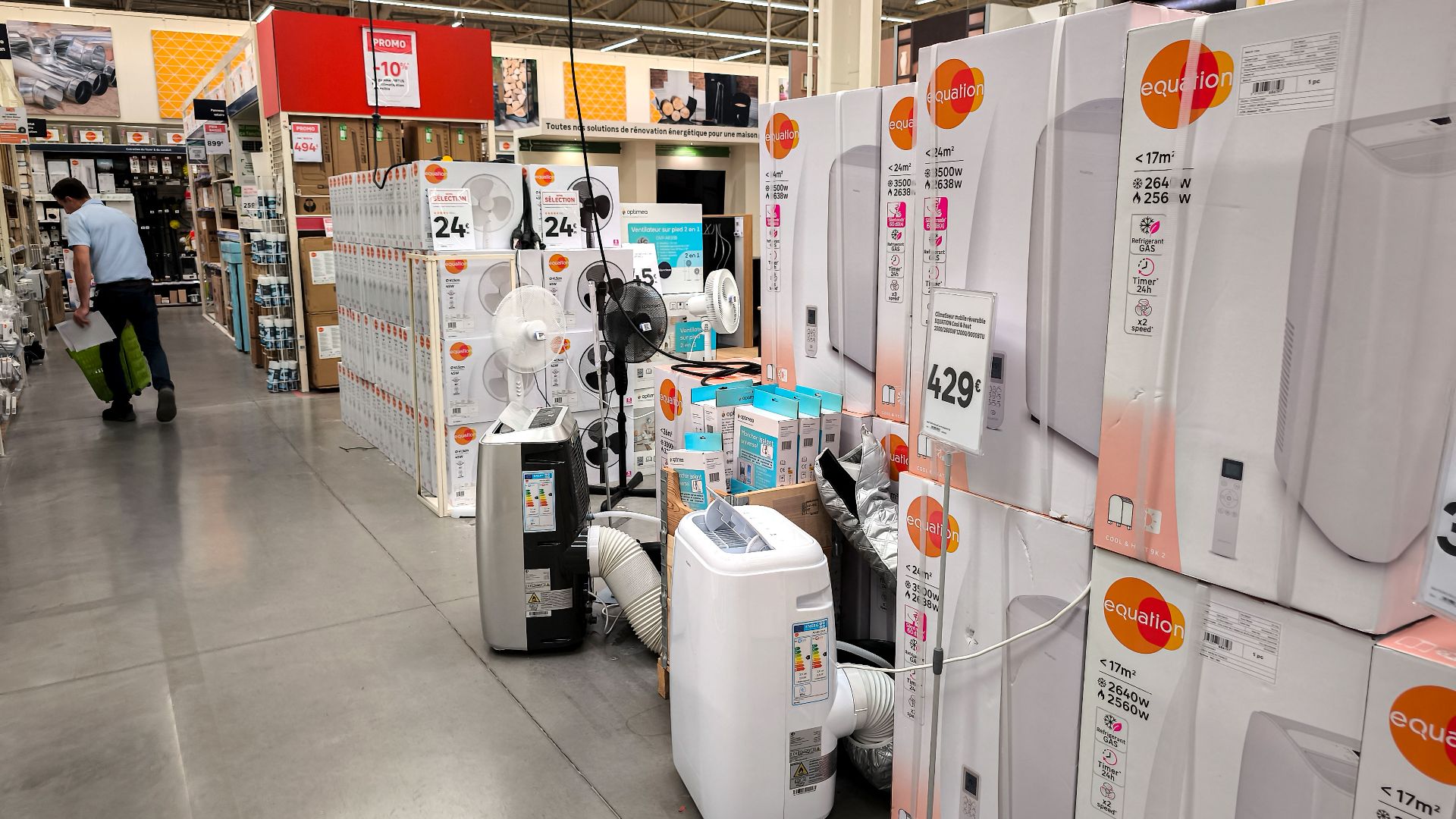
The unprecedented demand for air conditioners has reignited a long-running debate across France over whether widespread cooling is a necessary adaptation to climate change or an environmentally damaging solution that could worsen the problem in the long term. For decades, successive governments encouraged better insulation, natural ventilation, shutters and urban greening rather than installing air conditioning, arguing that widespread use would increase electricity consumption and greenhouse gas emissions. But as summers become longer and more intense, that position is increasingly being challenged by local officials, business owners and health experts who argue that cooling systems are no longer a luxury but a public health necessity. Many hospitals, nursing homes and schools have struggled to cope with the unprecedented temperatures, while millions of residents have found themselves without an effective way to escape the heat inside their homes. Climate experts stress that air conditioning alone cannot solve the crisis and warn it must be accompanied by energy-efficient buildings, expanded green spaces and modern urban planning capable of reducing extreme temperatures without dramatically increasing carbon emissions.
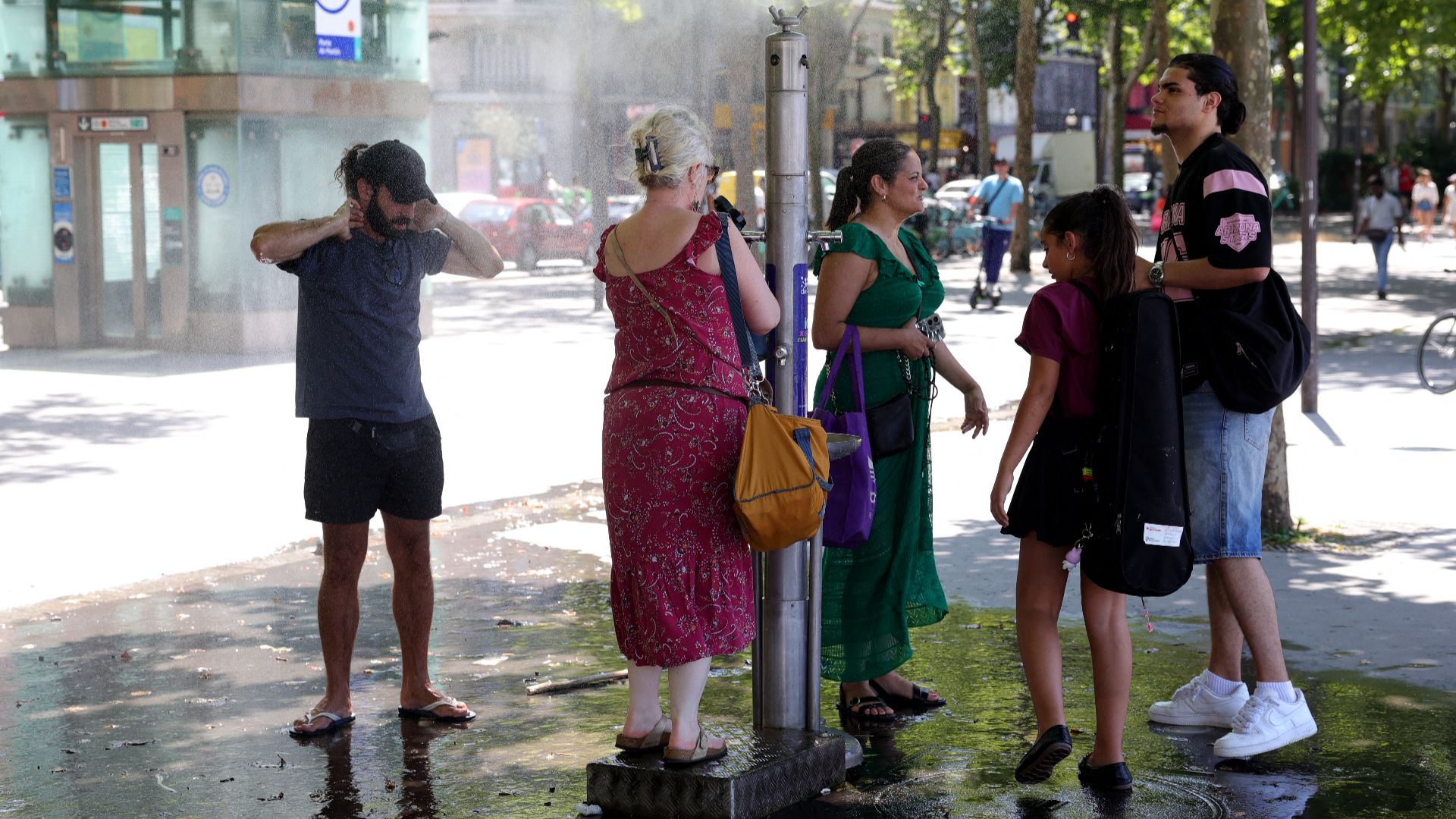
Health officials warn that the dramatic scenes unfolding inside French stores represent only one symptom of a much larger crisis affecting the continent. Earlier this year, the World Health Organization announced that more than 200,000 people across Europe and associated countries had died from heat-related causes over the past four years, adding that nearly all of those deaths were preventable with better planning and adaptation measures. WHO Regional Director Dr. Hans Henri P. Kluge warned that «Heatwaves are no longer freak weather anomalies. They are now a recurring crisis inflicting suffering, claiming lives and fracturing our health systems and infrastructure.» He also emphasized that «We need a coordinated, powerful and institutional response.» The agency is urging governments to expand heat-health action plans, establish cooling centers, improve early warning systems and prioritize vulnerable populations, including elderly residents, outdoor workers and people with chronic illnesses. Scientists say Europe is warming faster than any other continent, making deadly heatwaves increasingly frequent and raising fears that the scenes witnessed across France this summer could soon become commonplace elsewhere on the continent.
«We need a coordinated, powerful and institutional response.»
-WHO Regional Director, Dr. Hans Henri P. Kluge
As another weekend of extreme temperatures approaches, retailers continue scrambling to replenish inventories while many consumers remain unable to find portable cooling units anywhere near their homes. Online marketplaces have reported soaring prices for secondhand air conditioners, installation companies are booked weeks in advance, and manufacturers are struggling to keep pace with demand generated by one of the most intense heatwaves Europe has ever experienced. What began as a handful of viral videos showing shoppers fighting over the last air conditioners has rapidly evolved into a powerful symbol of how climate change is reshaping everyday life across France. For many families, the search for an air conditioner has become less about comfort than survival as authorities continue urging residents to stay indoors, remain hydrated and check on elderly neighbors. With thousands of excess deaths already linked to the latest heatwave and forecasters warning that prolonged periods of extreme heat are becoming the new normal, France's chaotic rush for cooling may ultimately be remembered as one of the clearest signs that Europe has entered a fundamentally different climate era.

Created by humans, assisted by AI.
 Macron rejected Trump's wine tariff threat at G7 summit
 Canada and France strengthen defense cooperation as G7 opens