
China is stepping up efforts to support its stock market after a sharp reversal in artificial intelligence and semiconductor shares erased hundreds of billions of dollars in market value. The downturn has prompted Beijing to introduce new central bank liquidity measures, lower the cost of share buybacks and encourage major technology companies to repurchase their own shares. However, the measures have struggled to produce a sustained recovery, with investors continuing to weigh concerns about AI valuations, weak domestic demand and the profitability of Chinese technology companies. As of November 11, the market remains volatile despite renewed government intervention.
AI rally gives way to widespread losses
The selloff comes after a rally that followed Beijing's September 2024 economic stimulus announcement and accelerated as investors poured money into Chinese AI and semiconductor companies. By late October, the technology-heavy STAR 50 index had fallen approximately 40 per cent from its midyear peak, wiping out roughly $480 billion in market value, according to Reuters. China's benchmark CSI 300 also dropped 8.5 per cent in October, its steepest monthly decline in more than a decade. The losses have affected companies across the country's technology sector, reversing much of the optimism that had driven share prices higher.
The stock market evolved into a speculative crazy bull, And now we see the bubble bursting.”
Beijing-based fund manager Dong Baozhen to Reuters.
Beijing introduces new market support
On November 2, Chinese authorities announced another round of measures intended to stabilize the market. The People's Bank of China relaunched a swap facility that allows financial institutions to exchange less-liquid assets for more liquid ones that can be used to purchase shares. Thirty-one securities firms and fund managers applied for more than 100 billion yuan, approximately $15 billion, in liquidity support. Authorities also lowered financing costs for share buybacks and encouraged major technology companies to repurchase shares. The measures followed October's losses and were designed to provide liquidity and limit further selling pressure rather than immediately generate another broad market rally.
Recovery remains uncertain
The initial response to Beijing's announcement was short-lived. Chinese shares gained on Monday, November 2, as investors anticipated government support, but renewed selling followed the next trading session. The Shanghai Composite fell 1 per cent, while the technology-focused STAR 50 declined 4 per cent. Reuters reported that the CSI 300 was down approximately 13 per cent for the year as of November 3. Analysts at 22V Research said the latest measures appeared intended to establish a floor for the market, rather than recreate the broad rally that followed the government's 2024 stimulus announcement.
With this backdrop, we are skeptical that the authorities will attempt to engineer a broad-based rebound in equities,
Analysts Michael Hirson and Houze Song in a note.
Weak economy adding to investor concerns
The decline in technology shares has compounded existing pressure on China's economy, including a prolonged property downturn, weak consumer spending and sluggish economic growth. These conditions have made investors increasingly cautious about whether companies can generate enough earnings to justify their market valuations. Reuters Breakingviews reported on November 3 that analysts had reduced their aggregate forecasts for Chinese corporate earnings in 2027, with consumer-facing industries particularly affected by flat or declining revenue and shrinking margins. The report said government support for share purchases could help stabilize prices, but a more durable recovery would require improvements in corporate earnings and domestic demand.
Technology companies face valuation pressure
The scale of the AI selloff reflects how heavily investors had concentrated their money in Chinese technology companies. Reuters reported that AI stocks accounted for 42 per cent of China's market capitalization and 57 per cent of trading across mainland-listed A-shares and Hong Kong-listed H-shares, according to Goldman Sachs. Several high-profile companies have suffered substantial losses. Robot manufacturer Unitree, whose shares attracted significant retail investor interest when it listed, lost approximately half its value after beginning trading in August. Semiconductor companies CXMT, MetaX Integrated Circuits and Moore Threads Technology also experienced steep declines from their recent highs.
The downturn has raised concerns about the sustainability of China's efforts to build a domestic AI industry through its stock market. Companies that previously attracted substantial investor interest may now face greater difficulty raising money through public listings. Reuters reported that the STAR 50 was still trading at approximately 100 times trailing earnings in late October, despite falling from a peak valuation of nearly 250 times earnings. That figure remained substantially higher than the Nasdaq 100's valuation of approximately 30 times earnings, leaving investors concerned that further declines could follow.
Global competition adds another challenge
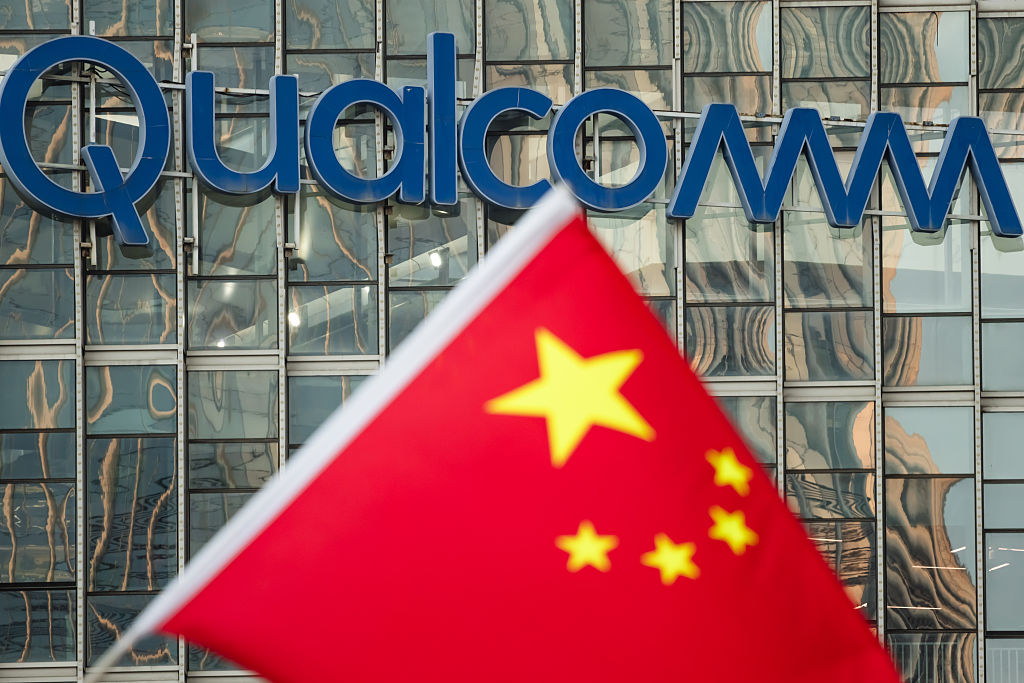
Chinese technology companies are also facing uncertainty over access to international markets and the future demand for AI infrastructure. Concerns about potential restrictions from the United States and other countries on Chinese equipment used in data centres have contributed to the decline in some semiconductor and optical technology shares. At the same time, uncertainty surrounding global spending on AI infrastructure has weakened investor confidence in the sector. Chinese chipmakers and AI suppliers are also expected to face greater price competition as more companies enter the market. These pressures have made it harder for investors to determine whether current valuations reflect sustainable earnings or expectations of future growth.
Markets showing signs of stabilization
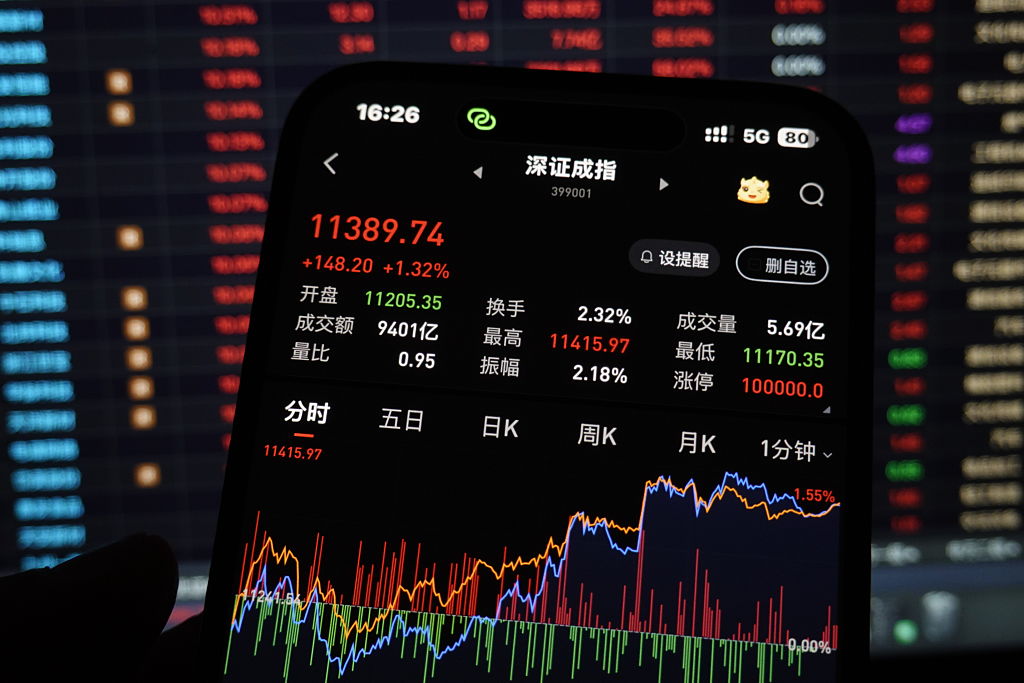
By November 11, Chinese mainland markets began to record some gains, although Hong Kong shares continued to face pressure. Reuters reported that the Shanghai Composite closed up 0.5 per cent on Wednesday, while the blue-chip CSI 300 gained 0.4 per cent. The technology-focused STAR 50 rose 2.8 per cent, with telecommunications and optical communications companies among the stronger performers. However, the gains came as investors continued to assess global interest-rate concerns and the effectiveness of Beijing's support measures. The recent rebound has not erased October's losses or resolved the underlying concerns about China's economic growth and corporate earnings.
Beijing's latest intervention reflects an effort to prevent further deterioration in investor confidence while maintaining the stock market as a source of financing for the country's technology sector. The government has expanded liquidity support and encouraged companies to buy back shares, but analysts have warned that these measures cannot replace stronger earnings and domestic demand. The scale of the AI selloff has also exposed the risks of relying heavily on a small number of high-growth industries to drive market performance. While some technology shares have recovered in recent sessions, the longer-term outlook will depend on whether companies can translate AI investment into sustainable revenue and profits.
Share this post


Popular posts
-
Democrats Plan Investigations Into Trump's Business Empire, Epstein Files and ICE
-

20 Strange Things People Once Believed About Twins
-
Trump Blames Republican Candidates for Crushing Midterm Losses as Exit Polls Reveal Widespread Rejection of His Presidency
-
Trump Admits ICE Crackdown Was «Too Tough» and Hurt Him Politically, While Promoting Hardliner Stephen Miller