Miami Flips Blue for the First Time in Nearly 30 Years, Rejecting Trump’s Chosen Candidate


/https%3A%2F%2Fcdn-tor.buminteractif.com%2F2025%2F12%2F10163107%2Ftrump-miami-blue-getty3-458fn.jpg)
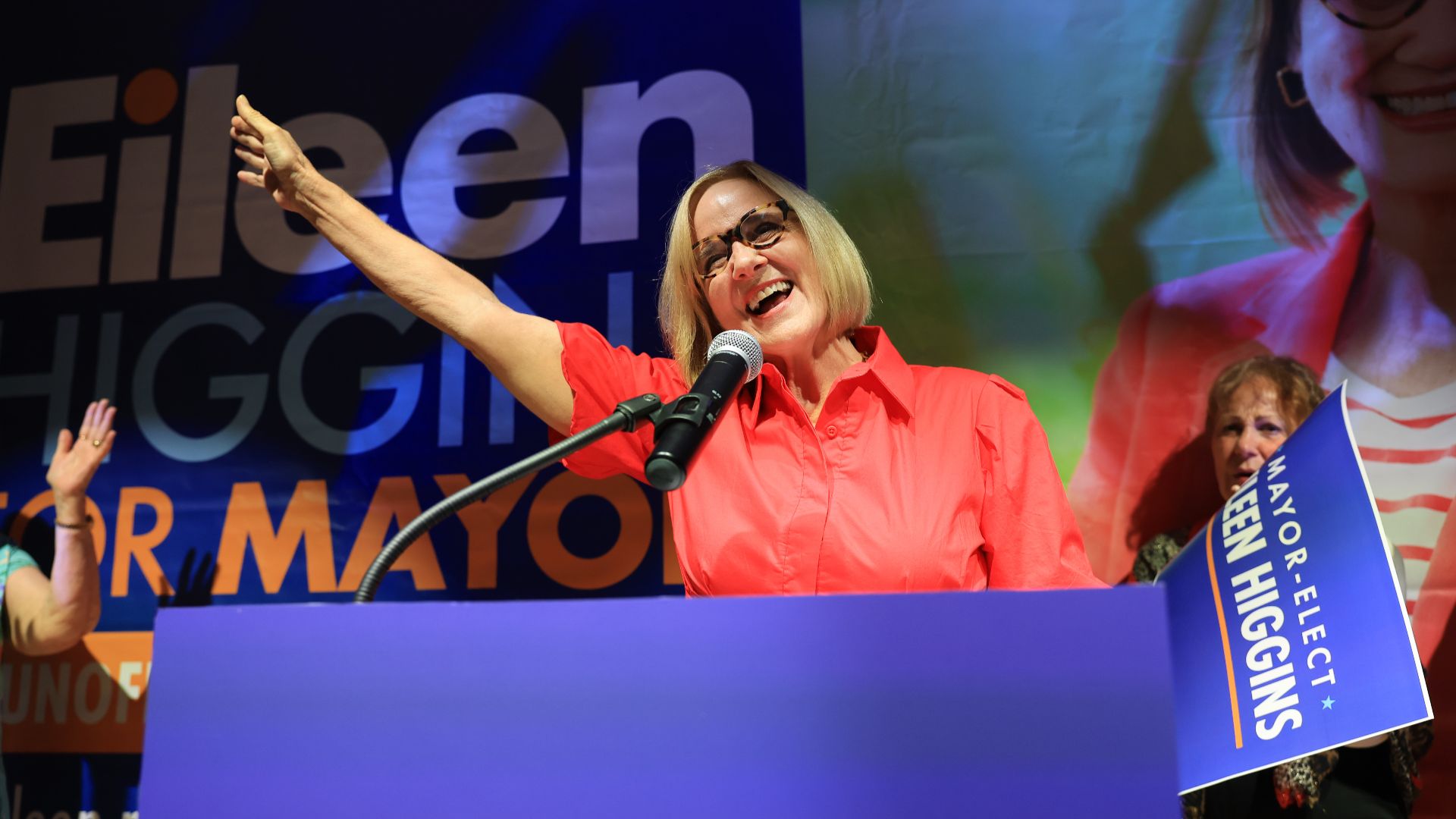
Democrat Eileen Higgins, a former county commissioner, defeated Republican Emilio González in the Miami mayor's race, flipping a city widely viewed as deep Trump country blue for the first time in 28 years, a shift that breaks with nearly three decades of Republican control at City Hall and highlights how local dynamics can diverge from national narratives about South Florida. Higgins won about 60% of the vote, a decisive margin that left little doubt about the result and handed a clear and public defeat to Trump-backed candidate Emilio González, whose campaign had leaned heavily on his Republican credentials and support among conservative voters. The scale of Higgins's victory shows that a Democrat can still build a broad coalition in Miami, bringing together longtime residents, younger voters and independents who were ready to turn the page on the city's recent political direction, and it firmly plants a blue marker in a place that, until now, had been regarded as safe territory for Republicans.
In the final weeks before Miami went to the polls, national Republicans closed ranks around Emilio González, turning a normally sleepy mayor's race into a showcase for the right's biggest stars and an explicit test of the movement's strength in a city often described as deep Trump country. Trump, DeSantis and JD Vance all lined up behind the Republican, but it was Trump who put the most emphasis on the contest, using his megaphone on Truth Social to fire off a message that began with a blunt reminder to his followers: «Miami's Mayor Race is Tuesday.» Trump immediately raised the stakes, insisting that this local contest carried national weight with the line: «It is a big and important race!!!». Then Trump tell his supporters exactly what he wanted from them: «Vote for Republican Gonzalez.» To seal the endorsement, he added a splash of his trademark hype — «He is FANTASTIC!» — before nudging his audience to turn that enthusiasm into action right away with: «You can also vote today.» And, as always, he closed by folding the Miami mayoral race into his broader political project, signing off with his familiar rallying cry: «MAKE AMERICA GREAT AGAIN!».
A new direction
Higgins gave her victory speech at the Miami Woman's Club, celebrating what she called a turning point for a city that had been pulled for years into the gravitational field of national Republican politics, and when she told the room «Miami chose a new direction», the crowd erupted, hearing in that line not just a celebration of her win but also a pointed contrast with what many in Miami see as the Trump administration's habitual disorder, improvisation and lack of basic competency. A little later in the speech, she sharpened that contrast even more with a line that summed up her pitch to voters from the start of the campaign: «You chose competence over chaos, results over excuses and a city government that finally works for you.». She wove those ideas through the rest of her remarks, framing the result as a declaration of independence from outside political pressures and a reassurance that the city's priorities would be anchored once more in local needs rather than national theatrics, and her message landed not only with supporters in the room but also with strategists across Florida who immediately began reading the result as a sobering signal for upcoming contests, because this loss — delivered despite Trump, DeSantis and JD Vance throwing their full weight behind González — suggests that Trump's brand is no longer a guaranteed turnout engine in every Latino-heavy, previously friendly corner of South Florida, and that the political map in the region may be more fluid than Republicans have assumed for the past decade.

In last November's off-year elections, Democrats were already building the wave that would later hit Miami: in New York City, Zohran Mamdani took City Hall with just over 50% of the vote, beating Andrew Cuomo by a little under ten points while Republican Curtis Sliwa was left in single digits, a narrow but clear majority in a huge, polarized city. That same night, Abigail Spanberger flipped Virginia's governorship, defeating Republican Winsome Earle-Sears by about 58% to 42% — a margin of more than fifteen points and the strongest Democratic showing in a Virginia governor's race since the early 1960s. In New Jersey, Mikie Sherrill didn't just hang on for Democrats, she blew past expectations in what was supposed to be a nail-biter, turning a race many analysts rated as a toss-up into roughly a fourteen-point win over Jack Ciattarelli, the biggest Democratic margin in the state in decades. Taken together with Mamdani's under-ten-point but symbolically huge victory in New York and a series of Democratic overperformances in specials earlier in the year, those November results looked less like isolated blue pockets and more like the early shape of a trend, giving Democrats a sense of real momentum as the 2026 midterm elections draw closer.
This content was created with the help of AI.
