

/https%3A%2F%2Fcdn-tor.buminteractif.com%2F2026%2F07%2F09194244%2FHMkEhBpXAAEIYAc.jpeg)
In a move promoting national unity, Ontario Premier Doug Ford is pitching a 3,300-foot pipeline between Ontario and Alberta that will ship Albertan oil east to refineries in Sarnia, Ont. Ford was in Alberta for the Calgary Stampede when he signed the deal with Alberta Premier Danielle Smith. The proposed ‘Northern Shield Energy Corridor' will be crucial to creating a united Canada, according to Ford and Smith. Ford said the planned pipeline would move between 500,000 and 800,000 barrels of oil a day and move from Hardisty, Alberta, to Sarnia via Regina and Winnipeg.
Federal government stays non-committal
With funding for this proposed pipeline currently nonexistent, the federal government is staying noncommittal regarding the pipeline. As of now, the majority of the pipeline would be funded through taxpayer dollars, something the Canadian government wishes to avoid. According to Ford and Smith, they will be aggressively pursuing private sponsors for the pipeline, but private funding brings with it its own slew of issues. The spokesperson from Ottawa claimed that the feds will be focusing on the West Coast pipeline, which has already been advanced to the Major Projects Office.
Given the West Coast pipeline proposal is sufficiently advanced to have been referred to the Major Projects Office due to its diversification and nation-building potential, that project is our priority at this time
-Energy Minister Tim Hodgson
How will the pipeline be funded?
As of now, the new pipeline is expected to cost between $35.2 billion and $43.7 billion. The federal government and the provincial governments involved will own the pipeline, with private ownership accounting for just a 10 per cent stake. The government will also offer an equity stake to Indigenous peoples. Ford and Smith's goal is to increase private partnerships for the pipeline, but the outlook isn't promising. The Pembina Institute – the company currently funding the 10 per cent stake in the pipeline – claims that if private companies were interested in funding the project, they would have already reached out to the governments involved.
If there was any kind of reasonable return on investment to be made, a private company or companies would have put up the cash.
-Pembina Institute
Without enough private investment, the pipeline would require tens of billions of taxpayer dollars.
Indigenous communities balk
The pipeline has also drawn the ire of indigenous communities across Canada. The proposed project will cross 77 different indigenous communities and will need approval from all 77 in order to proceed. Provincial governments are already balking due to the destruction of indigenous land. Manitoba Premier Wab Kinew has withdrawn his province from the proposal. The proposal has been refuted by the Anishinabek Nation, specifically, which claimed it was not consulted before the announcement. Anishinabek Nation Grand Council Chief Linda Debassige expressed her concerns about the plan and her chagrin at the government's lack of communication.
Major nation-building projects have to be built the right way. That's why we're continuing to work directly with northern communities, Indigenous Nations and the Manitoba Crown Indigenous Corporation as we advance discussions around Churchill's future. Those conversations will continue, because lasting economic development is built in partnership,
-Wab Kinew
Ontario Premier Doug Ford claimed that he's hopeful that a resolution will be reached between Manitoba, Alberta, and Ontario. Ford claimed that Kinew needs to consult with Manitobans in order to push this project along. At the same time, Kinew has claimed that he will only invest in projects that work directly with northern communities.
What will the pipeline do?
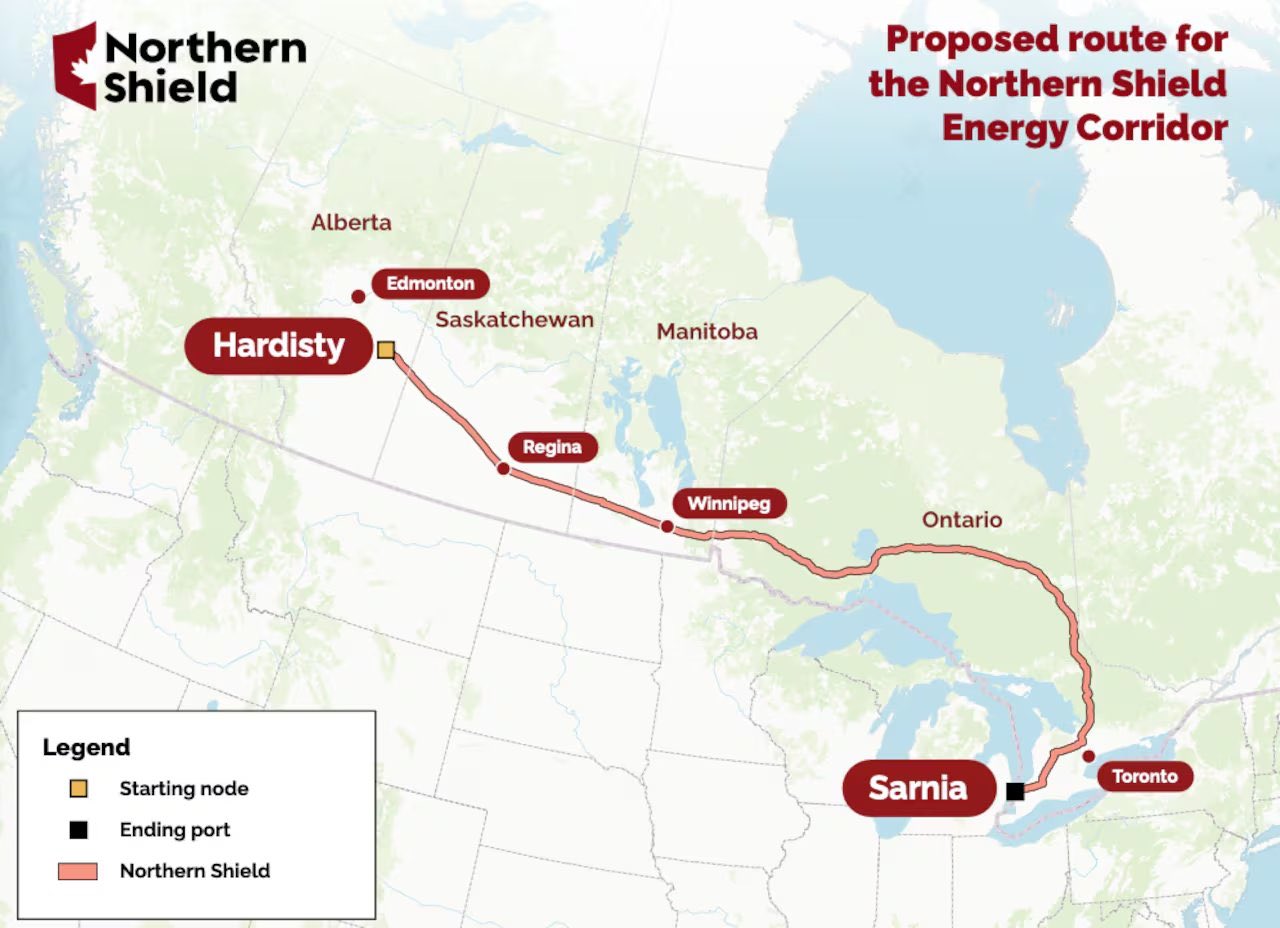
The pipeline will run alongside most of the Trans-Mountain pipeline, traversing more than 3,000 feet and connecting Alberta to Ontario. According to Smith, the pipeline could enable the transport of Alberta oil to Europe, potentially creating new profit opportunities for the province. The motivation for building the pipeline is tied to the US-Canada trade war. Right now, the majority of Ontario's oil comes from Alberta, but it comes to Ontario via the United States. With ‘Northern Shield,' the oil would be transported directly from Alberta to Ontario, bypassing the US.
