

/https%3A%2F%2Fcdn-tor.buminteractif.com%2F2026%2F03%2F09195041%2FGettyImages-2265167236.jpg)
Less than a week after experts gave hope to traders, their ‘worst case scenario' has finally happened. On March 9, markets opened to oil prices surging to more than $100 a barrel for the first time in nearly four years. The price for a barrel of Brent crude, the international standard, was at $107.97 after trading resumed on the Chicago Mercantile Exchange, up 16.5% from its March 6 closing price of $92.69. West Texas Intermediate, produced in the United States, was selling for about $106.22 a barrel. That's 16.9% higher than its closing price on March 6 of $90.90.
Look, you never know exactly the time frame of this, but, in the worst case, this is a week's thing, this is not a months thing
-US Energy Secretary Chris Wright.
Iran war impacting prices
Donald Trump and Israel's war on Iran has been the largest contributing factor to the price of oil. The Strait of Hormuz, a narrow strait off the coast of Iran, is now constantly at risk with Iran and Israel bombing vessels in the region. Nearly a fifth of all the world's oil is transported through the Strait. Iran's selection of its new leader, Mojtaba Khamenei, has also sunk oil prices. Khamenei, the son of slain leader Ali Khamenei, is expected to continue in his father's footsteps of tyrannical, Islamic reign. His father killed tens of thousands of Iranian civilians across his nearly 40-year reign.
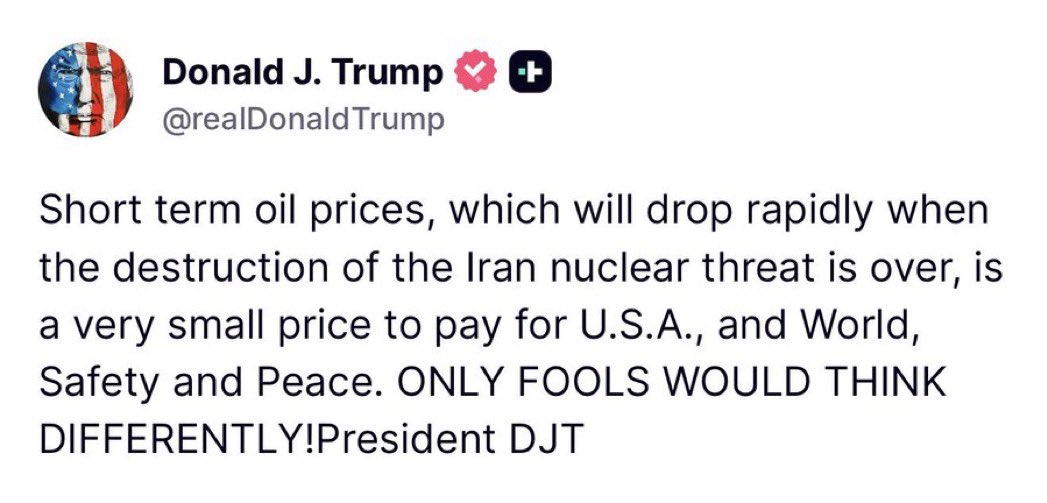
During the first week of March, the price of U.S. crude oil jumped by 36%, and Brent crude rose 28% last week. Oil prices have surged as the war, now more than two weeks old, has sucked in countries and places that are critical to the production and movement of oil and gas from the Persian Gulf. Iran has been attacking American military and diplomatic installations across the Gulf Coast, and the bombings have created a precarious situation through the Strait of Hormuz and in multiple energy hubs. Countries like Kuwait and Qatar have long enjoyed a peaceful existence in the Middle East and are now being threatened daily.
Attacks on oil infrastructure
Alongside military and diplomatic targets, Iran has been striking oil refineries across the Gulf Coast as well. On March 4, Iran targeted an Aramco Oil refinery in Ras Tanura, Saudi Arabia. Officials reported the drones had successfully reached the facility but had not caused any damage. A day later, on March 5, Iran attacked a Bapco oil refinery in Bahrain, sparking a fire at the facility. Bahrain's defence forces intercepted two additional cruise missiles. Both attacks had immediate impacts on international oil prices.
On March 7 and 8, Iran targeted more oil targets across the Gulf Coast. Iran repeatedly bombed the Shaybah oil field in the Rub' al Khali desert in Saudi Arabia, one of the country's richest deposits. Iranian missiles targeted a refinery on the field, and Saudi Arabian defences reported intercepting more than ten drones in less than two hours. Aramco's Berri oil field was also targeted on the 7th, with an unspecified number of drones being intercepted. On March 8, more drones attempted attacks on the Shaybah oil field, and in Kuwait, drones targeted fuel tanks at Kuwait International Airport.
With Iran striking fuel and oil-related targets, oil is getting more precarious, not less, and experts are warning the global economy will not be able to survive more than a couple of weeks with oil trading at more than $100 a barrel.
War on Iran
On February 28, 2026, the US government and Israel undertook a joint operation in Iran, with the US subsequently declaring it was at war with the country. The attacks triggered retaliatory strikes from Iran, targeting US and Israeli military bases across the Middle East. According to Donald Trump, there is no timeline for this war, and the US will continue its operations in the country until it sees a significant regime change, as well as an end to Iran's supposed nuclear program.
US and Israeli strikes killed Iran's Supreme Leader, Ali Khamenei, on Day One of the war, completing Trump's supposed goal. Khamenei has been using deadly violence against civilian protesters in Tehran, and his killing has been the only positive piece of Donald Trump's illegal intervention. Donald Trump changed his reasoning for attacking Iran after Khamenei's death, instead claiming he attacked Iran because he had certain information that Iran was going to attack Israel and the United States. Israel calls the strategy ‘forward defence'.
Now Lebanon and the rest of the Gulf countries have been sucked into the conflict. Iran has struck US infrastructure in nine different nations, and the Lebanese-based, Iranian-funded group Hezbollah has announced it's ready for open war with Israel. With experts expecting Mojtaba Khamenei to continue in his father's footsteps as a hardline, tyrannical leader, Donald Trump's war on Iran is far from over.
