Ottawa announces billion-dollar bailout to steel and aluminum sectors to combat Trump tariffs


/https%3A%2F%2Fcdn-tor.buminteractif.com%2F2026%2F05%2F04172412%2FGettyImages-2259503676.jpg)
The Canadian Federal government announced a $1 billion loan program on May 4 as a lifeline for steel, aluminum, and copper sectors affected by US President Donald Trump's latest wave of tariffs. Industry Minister Mélanie Joly and Minister responsible for the Federal Economic Development Agency for Southern Ontario Evan Solomon made the announcement at a manufacturing plant in Vars, Ontario. Joly said that the Canadian government will be establishing a $1-billion loan program through the Business Development Bank of Canada (BDC) so that companies most affected by the Trump scheme can get the money they need to stay in business. According to Joly, the loans will be available on ‘favourable terms' for at least the next three years.
There will also be a separate $500 million fund that rewards companies for what Joly called ‘strategic pivots' to move away from US market reliance. Donald Trump's tariffs have created an increasingly unsupportable marketplace in what was once Canada's most reliable trade partner. With the extra $500 million fund, the government has dedicated a total of $1.5 billion to the steel, aluminum, and copper sectors. This newest lifeline represents the newest fund to combat Trump's tariffs, announced on February 1. There is currently a 50 per cent tariff on Canadian steel imports to the USA and Canada has responded with tariffs of its own, impacting at least $30 billion in US goods. Canada has also levied tariffs on Chinese steel to counteract Trump's tariffs.
“When markets turn unfair, Canada needs institutions that can step up and deliver fast. BDC is ready to get this money into the operations of steel and aluminum companies quickly, keeping their doors open and them producing,”
-Isabelle Hudon, the president and CEO of Business Development Bank of Canada (BDC)
Tariffs to stay?
Minister Melanie Joly was asked whether or not Donald Trump's tariffs would stay indefinitely, to which Joly admitted she didn't know. The government claims the new funding package is required after Donald Trump extended his tariffs on steel, aluminum and copper levies last month to apply to more products, including previously exempt derivatives like steel coils and aluminum sheets. The change has impacted Canadian tool and mould manufacturers, who are now seeing massive customs bills at the Canada-US border. One Canadian company, Laval Tool & Mould Ltd, has announced that Trump's tariffs will cost the business at least $5 million in 2026. Nicole Vlanich, the executive director of the Canadian Association of Mould Makers (CAMM), broke down the cost of Trump's tariffs, claiming “A mould that was paying $1,500 in tariffs a couple of weeks ago is now paying over $30,000.”
“You don't know. I don't know. This is not up to us to answer. These decisions will be taken south of the border. But we don't just sit idle waiting for things to happen — we act,”
Melanie Joly in response to whether US tariffs would continue
According to US Trade Representative Jamieson Greer, the tariffs are here to stay. Greer has been Trump's point man on trade negotiations with Canada. Greer stated on May 4 that Trump is wedded to his tariffs, and they won't be going anywhere as long as he is in office.
“The president's not gonna go back to the old situation where we had no tariffs and we just let foreign goods made by foreign workers come in without any fee,”
Jamieson Greer
According to data from StatsCan, the official national statistical agency of the Government of Canada, Trump's tariffs have essentially collapsed exports of steel products to the United States. As of 2025, the value of Canadian steel exports to the US was just a third of what it was before Trump took power in his second term. Trump's ‘protectionist agenda' has created layoffs across Canada, most notably in Sault Ste Marie, where Algoma Steel laid off more than a thousand workers. The layoffs represent more than a third of the plant's personnel, with almost all of those layoffs impacting base-level employees.
Tariffs causing suffering on both sides of the border
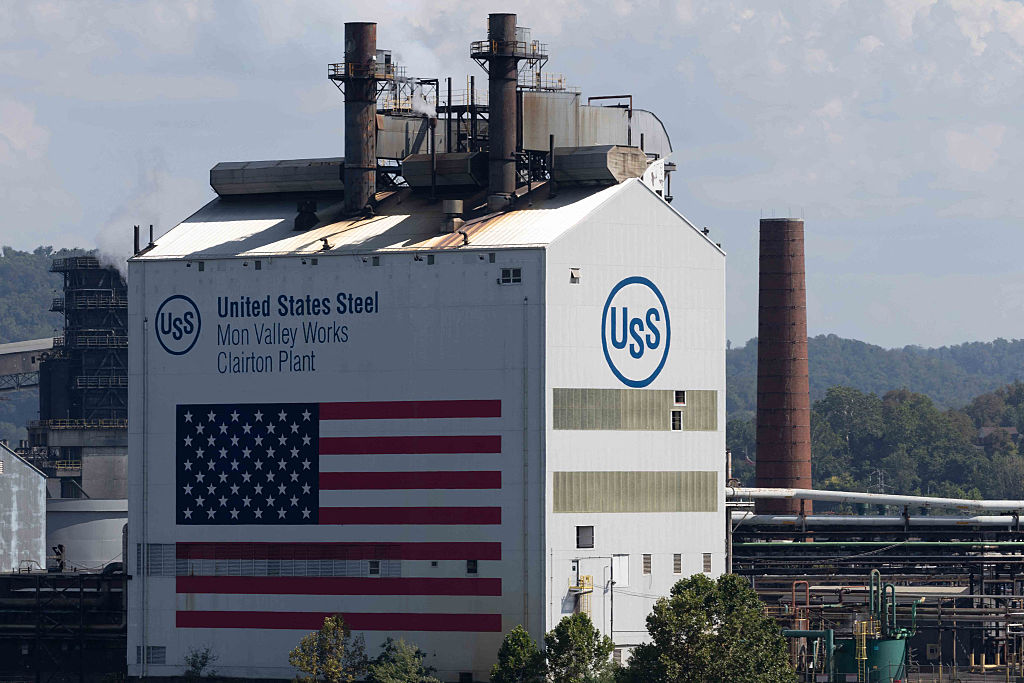
While Trump's aggressive tariffs are meant to directly inject cash and jobs into the US steel sector, statistics show the impacts have been anything but positive. According to research from the US Tax Foundation, a nonpartisan research think tank in Washington, Section 232 tariffs have led to the equivalent of more than 150,000 jobs lost, not gained. Data from the World Steel Association, the international industry body, also shows that Trump's tariffs are not having the intended effect, with US production only increasing by a marginal three per cent. According to Trump, his tariffs were going to create “millions and millions” of jobs, and regional production would increase “like you've never seen before.” Neither of these statements has rung remotely true.
