

/https%3A%2F%2Fcdn-tor.buminteractif.com%2F2026%2F07%2F28210916%2FGettyImages-2287539432.jpg)
Donald Trump's repeated attacks on Canada are having an impact. Not just on Canadians, but apparently on Americans too. New polling suggests the president's rhetoric may also be changing how Republican voters view one of the United States' closest allies, with support for Canada falling sharply. Political scientists say the shift reflects the president's growing influence over Republican opinion as he increasingly blames Canada for trade disputes and economic frustrations while reviving familiar claims that the country has taken advantage of the United States. The trend comes as Trump continues to face declining approval ratings and mounting political pressure.
Recent Gallup polling shows Canada's favourability rating among Republicans has fallen from 85 per cent in 2025 to 62 per cent this year, a 23-point decline in just 12 months. The drop stands in sharp contrast to views among Democrats, where 95 per cent continue to hold a favourable opinion of Canada. Political independents also remain largely supportive, with 80 per cent expressing positive views despite a modest decline from last year. Researchers say the widening partisan divide reflects how increasingly polarized American politics has become under Trump's second administration.
Attitudes pro and con about Trump drive our politics.
Robert C. Rowland, University of Kansas
Republicans following Trump
Political scientists say Republican voters have become more willing to adopt Trump's positions on issues that once enjoyed broad bipartisan consensus. Matthew Lebo, a political science professor at Western University, pointed to changing Republican attitudes toward tariffs, CUSMA, and the war with Iran as evidence that Trump's messaging increasingly shapes opinion within the party. He argues that when Trump repeatedly claims Canada has treated the United States unfairly, many Republican voters begin accepting those arguments regardless of previous views or longstanding diplomatic ties between the two countries.
Republican politicians also following Trump
The shift is also influencing Republican politicians. Lebo says members of Congress and candidates preparing for competitive primary elections may increasingly criticize Canada as a way to appeal to Trump's most loyal supporters. In Republican primaries, demonstrating loyalty to the president often carries significant political value, particularly among voters aligned with the MAGA movement. While those attacks may energize the party's base, Lebo argues they are less likely to resonate with moderate or independent voters during general elections, creating different political incentives depending on the audience.
US still semi-favourable in Canada
The changing rhetoric comes as public opinion in Canada continues to be low, but acceptable. According to polling published by the Pew Research Center, 33 per cent of Canadians hold a favourable opinion of the United States, continuing a dramatic decline from recent years. Confidence in the bilateral relationship has deteriorated amid trade disputes, tariff threats and Trump's repeated suggestions that Canada should become part of the United States. Analysts say those comments have strained one of North America's closest diplomatic relationships while increasing political tensions on both sides of the border.
The findings raise broader questions about how durable Canada-U.S. relations may be if public opinion continues to polarize along party lines. For decades, Canada has consistently ranked among Americans' most trusted allies regardless of which party controlled Washington. Researchers now warn that dynamic is beginning to shift as Trump's messaging increasingly shapes Republican views on foreign policy, trade and international partnerships. They say Canada has become part of a wider political narrative in which allies are portrayed less as strategic partners and more as economic competitors, creating new uncertainty for cross-border cooperation on trade, defence and security.
US still views Canada positively overall
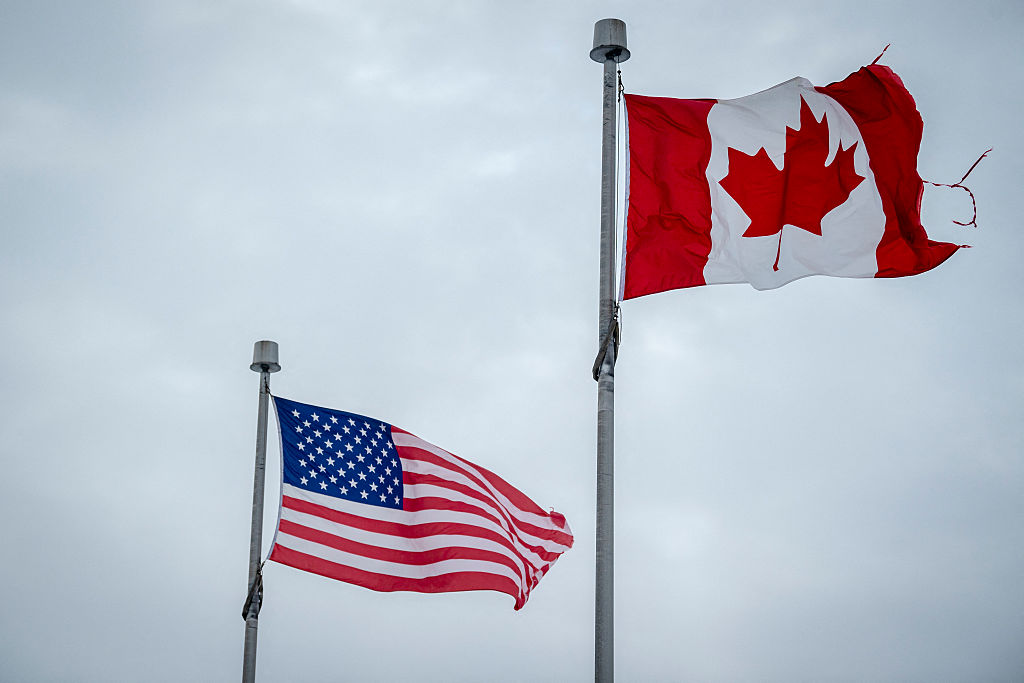
Despite the sharp decline among Republicans, Canada remains one of the most favourably viewed countries in the United States overall. Analysts caution that public opinion can change quickly, particularly during election cycles, but say the latest polling illustrates the growing influence of presidential rhetoric on partisan attitudes. With the 2026 midterm elections approaching and Trump continuing to criticize Canada over trade, tariffs and sovereignty, researchers expect the relationship to remain a recurring political issue. Whether those changing perceptions persist beyond Trump's presidency may ultimately determine if the shift represents a temporary political trend or a lasting change in how Republicans view one of America's closest allies.
