

/https%3A%2F%2Fcdn-tor.buminteractif.com%2F2025%2F12%2F08182027%2FGettyImages-2226068236.jpg)
Thailand launched air strikes on neighboring country Cambodia on Monday, according to the Thai army. The strike came just hours after a border skirmish in Ubon Ratchathani province became deadly early Monday morning, with both sides blaming each other for its happening. One Thai soldier was killed in the scuffle. Thai army spokesman Winthai Suvaree said in a statement, “the Army received reports that Thai soldiers were attacked with supporting fire weapons, resulting in one soldier killed and four wounded.”,
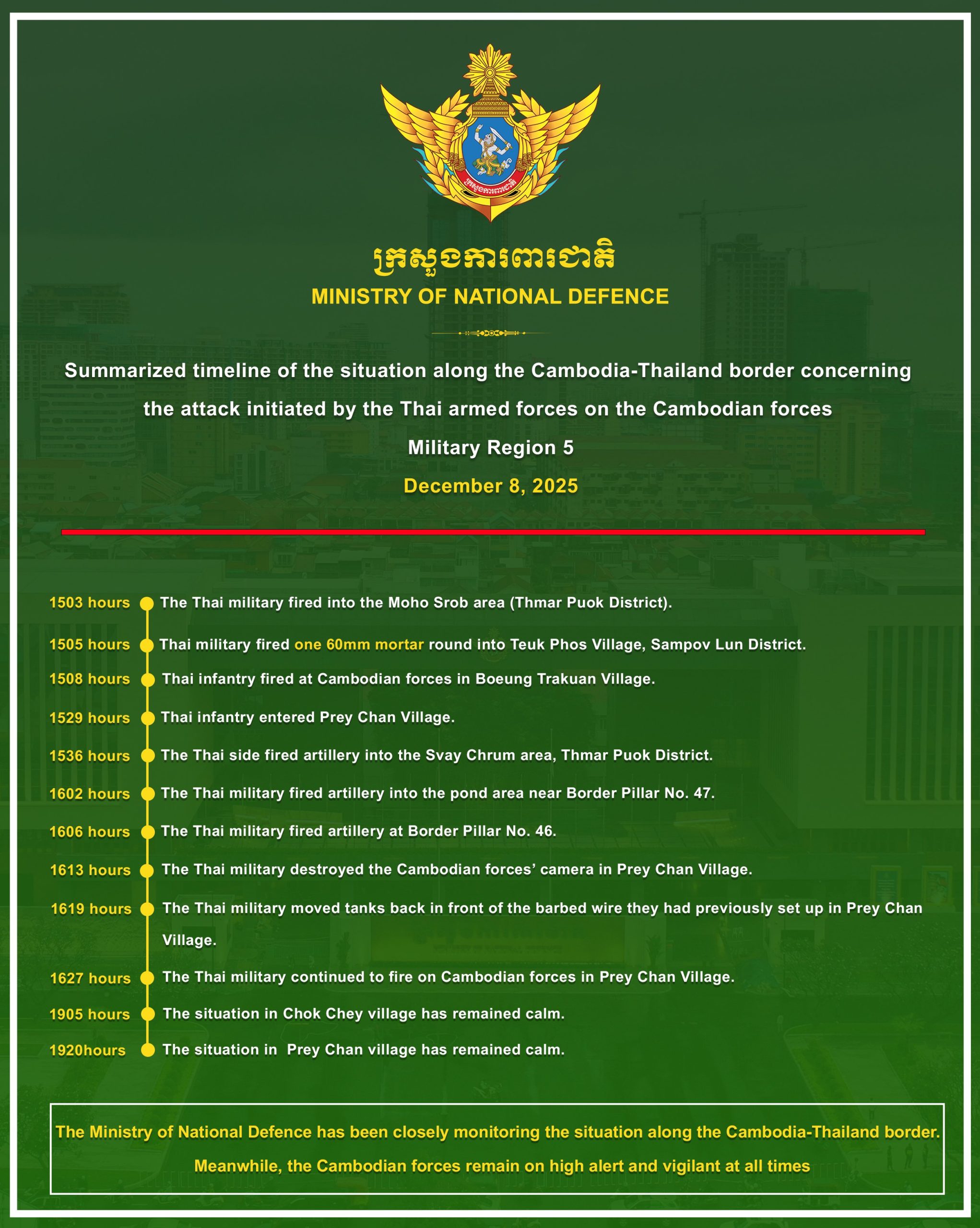
Suvaree claimed that Cambodian forces fired on the Thai first, but the Cambodian defence ministry spokeswoman Maly Socheata said that the Thai forces had launched an attack on the Cambodian troops in the border provinces of Preah Vihear and Oddar Meanchey even before the incident in Ubon Ratchathani. According to Socheata, Thai forces “[fired] multiple shots with tanks at Tamone Thom temple” and other areas near Preah Vihear temple. Tamone Thom and Preah Vihear are ancient temples, built in the 11th century; they're both estimated to be 1000 years old, and Preah Vihear was declared a world heritage site in 2008. The International Criminal Court (ICC) prosecutes destruction of cultural heritage as a war crime.
Clashes on the border
Early Monday morning, thousands of people on the Thailand-Cambodia border were displaced by fresh fighting that marked historic tensions between the neighboring nations. Four Cambodian civilians and one Thai soldier were killed in the firefight. This is the most deadly skirmish between Thailand and Cambodia since July, where more than 40 people were killed over five days of military violence. Thailand and Cambodia signed a peace deal after the battles in July. Monday's scuffle was the first time the countries have tested the deal.
In response to the clash at the border, Thailand dispatched air strikes to multiple Cambodian military targets, and according to Thai army spokesman Winthai Suvaree, Thailand has begun “using aircraft to strike military targets in several areas” in attempts to suppress Cambodian forces. Cambodia has not retaliated to any of Thailand's additional attacks, and according to Socheata, the country does not plan on responding with military action.
Thailand's Army said in a statement that more than 35,000 people in Thailand have been evacuated from areas along the border with Cambodia since the renewed fighting. Thai Prime Minister Anutin Charnvirakul said the country “never wished to see violence,” but will “not allow the violation of its sovereignty.” Thailand's Foreign Minister Sihasak Phuangketkeow told the media that Thailand will continue military action “until we feel that sovereignty and territorial integrity are not challenged.” Cambodia remains publicly committed to supporting the ceasefire in effect. According to Thailand's military, they began evacuating Thai citizens from border towns on Sunday. Reportedly, nearly 400,000 people have been evacuated to temporary shelters.
Cambodia and Thai military power
Thailand's military is significantly larger than Cambodia's, with Thailand boasting an annual budget of almost $7bn USD and more than 360,000 military personnel. Cambodia's military operates with an annual budget of $1bn USD, and carries just under 125,000 total personnel. The stark difference in these nations' military capabilities comes from the sky. Thailand owns more than 120 operational fighter aircraft, while Cambodia doesn't have any. It's no surprise that Cambodia remains dedicated to upholding the ceasefire, while Thailand appears to be willing to continue offensive aggression.
The governments of Japan and Malaysia have commented on the attacks, with Japan's Foreign Ministry expressing “deep concern over the situation between the kingdom of Thailand and the kingdom of Cambodia.” The statement continued to urge “both countries to observe the ceasefire agreement, exercise maximum restraint, and seek a peaceful resolution through dialogue.” Malaysia's Ministry of Foreign Affairs also commented on the incident, stating that ” both sides must promptly consult existing mechanisms” in order to “prevent the situation from escalating along the border.”
