/https%3A%2F%2Fcdn-tor.buminteractif.com%2F2026%2F05%2F07190439%2FGettyImages-2235977046.jpg)
The Canadian military has begun quietly developing and deploying counter-drone systems in and around Canadian ports in hopes of getting ahead of the new trend in warfare: uncrewed aerial vehicles (UAV's). The idea is to reportedly prevent the dangerous drone-led warfare that has crippled Northern Europe and has defined Russia's war on Ukraine. According to CBC, the project has been mostly under wraps, with the Canadian military striving for secrecy. According to the Canadian military, the systems are still a work in progress as drone-strike technology rapidly advances. The military reportedly plans on deploying these systems around all of its major ports and air bases.
Drone warfare in Ukraine
Russia's war on Ukraine has been fought like no other. Instead of being fought on the ground by soldiers, it's been largely fought from the sky using UAV's. In four years of war on Ukraine, Russia has used a litany of different UAV's. Ukrainian defence minister Mykhailo Fedorov confirmed in April that more than 80 per cent of the conflict's fatalities have come from unmanned drones, making it the first conflict in global history to not be defined by battlefield warfare. Russia and Ukraine use a series of different drones to undertake these military missions, with some being developed in Russia and Ukraine, and some being developed in Iran.
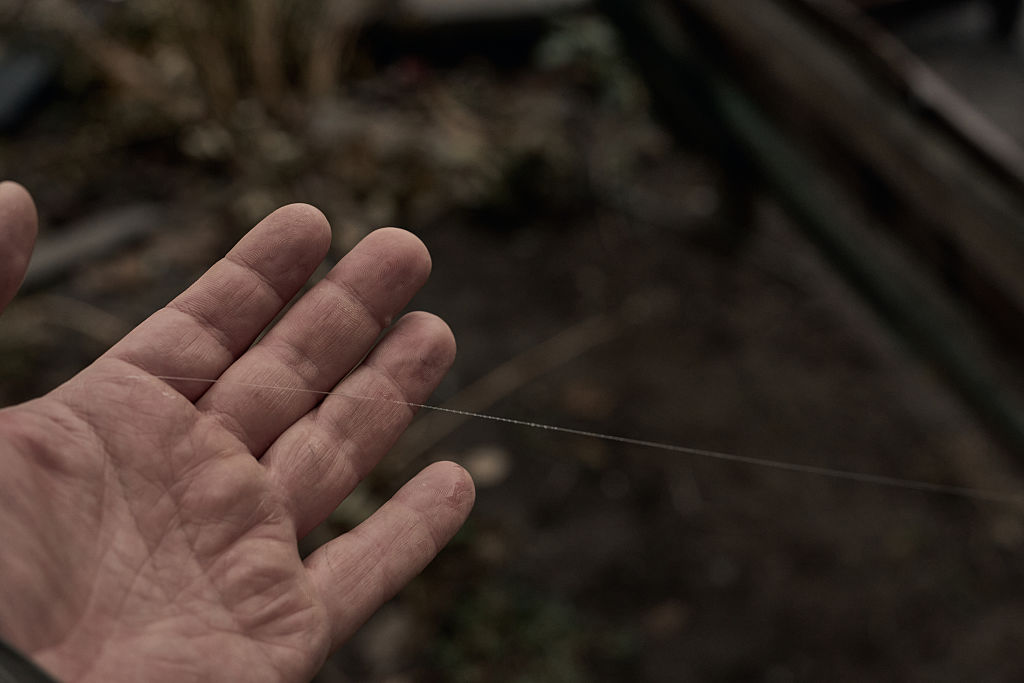
The two most impactful UAV types have been one-way Iranian-made Shahed drones (named Geran-type drones in Russia). These one-way ‘Kamikaze' drones have a range of up to 2,500 km and can carry a maximum weight of 90kg, meaning they can carry a 90kg warhead in their nose. While less dangerous, unmanned first-person view (FPV) drones have wreaked havoc on the Ukrainian environment. Connected to the operator by a long fibre-optic cable, these drones can travel up to 25km while still hardwired to the operator. The fibre-optic connection prevents these drones from being stopped by radio waves. The problem? When those drones go down or are sent on ‘kamikaze' missions, the fibre-optic cable is left behind. There are currently hundreds of thousands of fibre optic cables littering the Ukrainian countryside and creating health risks for people and animals. These fibre optic FPV drones are currently being developed by Russia, Ukraine, China, Iran, Israel, and, reportedly, the group Hezbollah in Lebanon.
Canada worried about drones
With reports of Ukraine successfully sinking multiple major Russian ships, including the ballistic missile carrier Tsyklon, as well as multiple submarines and airfields, Canada is taking drone warfare seriously. With drones able to sink major naval vessels, and incapacitating airfields, major Western militaries, including Canada, are taking note. Royal Canadian Air Force, Lt.-Gen. Jamie Speiser-Blanchet recently spoke in front of a committee, claiming that Canadian airbases are receiving new protection systems.
“We have developed and are already working with some counter-[UAV] systems that are in place, and continuing to be developed in certain locations across Canada,”
Interview requests from CBC and other outlets were denied by both Speiser-Blanchet and the Canadian Department of Defence.
Falcon shield system is already in place
While Canada aims to create new systems to defend from UAV's, there are already some systems in place. The Falcon Shield System, created by Italy and the UK, has reportedly been purchased by Canada, with the Royal Canadian Air Force announcing that it had begun training Canadian military personnel with the system in January 2025. The Falcon Shield uses radar, high-performance cameras and jamming to bring down drones. The system was originally deployed for Canadian troops in Latvia in 2024, but the military is reportedly working to bring the technology into Canada.
How can Canada police drones?
The Canadian government is working to uncover how drone defences can be deployed without affecting Canadian citizens. Cmdr. Philip Durand, director of naval requirements for sensors and warfare, said that the government needs to be conscious of both sides of the issue, and stressed that not all drones pose a threat to Canada.
“It is very hard to distinguish between a threatening drone coming off Point Pleasant Park, or someone who's just curious about the very cool warship that's coming into harbour,”
Durand stressed that legislation needs to be updated to protect both drone hobbyists and Canadian infrastructure. Durand said there's a series of nightmare scenarios and security threats to both military and civilian infrastructure that we're only just beginning to grasp. With drone technology now easily acquired by organized crime, hate groups, and just about anyone else who has $5,000 to spend on an FPV drone.