

/https%3A%2F%2Fcdn-tor.buminteractif.com%2F2026%2F05%2F25193105%2FGettyImages-2213409508.jpg)
Pope Leo XIV used his first major teaching document to deliver one of the most sweeping and politically charged messages of any modern pope, apologizing for the Vatican's historical role in slavery while warning that artificial intelligence, economic inequality and uncontrolled technological power now threaten the human race. In an 83-page encyclical titled Magnifica Humanitas (Magnificent Humanity) released May 25, Leo condemned what he described as new forms of “digital slavery,” and criticized the concentration of technological power among corporations while calling for stronger global oversight of artificial intelligence. The document is widely being viewed as the defining ideological blueprint for the early years of his papacy.
Pope Leo apologizes
The piece of the document sparking the most conversation is Leo's apology for the Catholic Church's direct role in legitimizing slavery. While previous popes condemned the slave trade or apologized for Christians' involvement in colonial abuses, Leo became the first pope to explicitly acknowledge that the Holy See itself authorized and enabled slavery through papal decrees issued during the Age of Discovery. The encyclical specifically referenced 15th-century papal bulls that granted European powers authority to conquer and enslave non-Christians across parts of Africa and the Americas. Leo described slavery as “a wound in Christian memory” and asked forgiveness for the Church's failures
“Yet neither can we deny or diminish the delay with which both society and the church came to denounce the scourge of slavery. This constitutes a wound in Christian memory, one from which we cannot consider ourselves detached.”
The apology immediately drew global attention, with Pope Leo directly addressing the Vatican's institutional responsibility rather than skirting the topic. Past papal statements typically focused on broader Christian participation in slavery without acknowledging the role official Vatican doctrine played in authorizing conquest and enslavement. The Vatican formally repudiated the so-called “Doctrine of Discovery” in 2023, but Leo's encyclical went significantly further by publicly confronting the Church's own legal and theological role in the trans-Atlantic slave trade. Activists and certain theologians have praised the move as historic, but are still arguing it should eventually be followed by discussions surrounding reparative justice and deeper institutional accountability.
Pope Leo on AI and techno-capitalists

Beyond the apology for slavery, Leo's encyclical focused heavily on artificial intelligence and the growing influence that technology companies have on humanity. Pope Leo warned that AI systems will hand enormous economic and political power into the hands of a small number of corporations, giving them the ability to undermine democracy, truth and human dignity. He criticized the use of AI in warfare, as well as misinformation campaigns and labour displacement, arguing that technological development cannot be separated from ethical responsibility. Leo also warned against autonomous weapons systems operating beyond meaningful human control, calling for international regulation and political oversight before AI becomes too deeply embedded in military and economic systems.
“No algorithm can make war morally acceptable,”
Leo also used the document to criticize widening economic inequality and what he describes as the moral failures of modern capitalism. Building on the social justice teachings of previous popes, Leo argued that economic systems increasingly value profit over human dignity while abandoning vulnerable communities, workers and migrants. He called for stronger protections for labour, ethical oversight of technological development, and prompted AI leaders to commit to social welfare. The pope warned that societies risk becoming spiritually hollow when economic systems prioritize efficiency and accumulation over compassion and community. The encyclical echoed many themes associated with Pope Francis while framing them more directly through the lens of technology and globalization.
Defending the vulnerable
Migration and refugees also emerged as central themes throughout the encyclical. Leo defended migrants as people deserving dignity and protection rather than political scapegoats, warning against governments and movements that treat refugees primarily as threats. Pope Leo argued that wealthy countries have moral obligations toward displaced populations while criticizing increasingly popular political rhetoric focused on exclusion and fear. As a former missionary in Peru, Leo has repeatedly emphasized migration and poverty as priorities throughout his early papacy. Vatican observers noted that his comments could intensify tensions with nationalist political movements in Europe and North America, particularly amidst increasingly polarized debates surrounding immigration and border enforcement policies.
This is Pope Leo
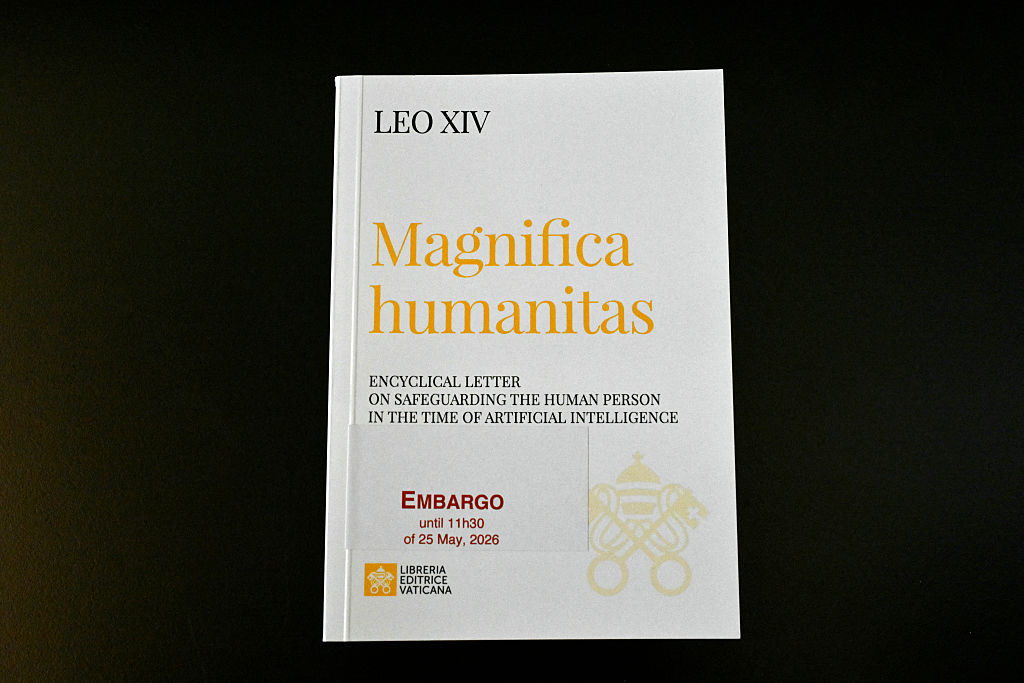
The release of Magnifica Humanitas is being viewed as the clearest indication yet of how Pope Leo intends to define his papacy. The first American-born pope has moved quickly to position the Vatican as a major moral voice in debates surrounding artificial intelligence, inequality, labour, and technological power. Earlier this month, Leo established a Vatican study group focused specifically on AI governance and ethics ahead of the encyclical's release. The document's title — translated as “Magnificent Humanity” — reflects Leo's argument that technology and economic systems must ultimately serve human dignity rather than dominate it. It is no mistake that Pope Leo asked for multiple AI leaders, including Christopher Olah, co-founder of US AI giant Anthropic, to be present for the reading.
