

/https%3A%2F%2Fcdn-tor.buminteractif.com%2F2026%2F06%2F10190024%2FGettyImages-2243988911.jpg)
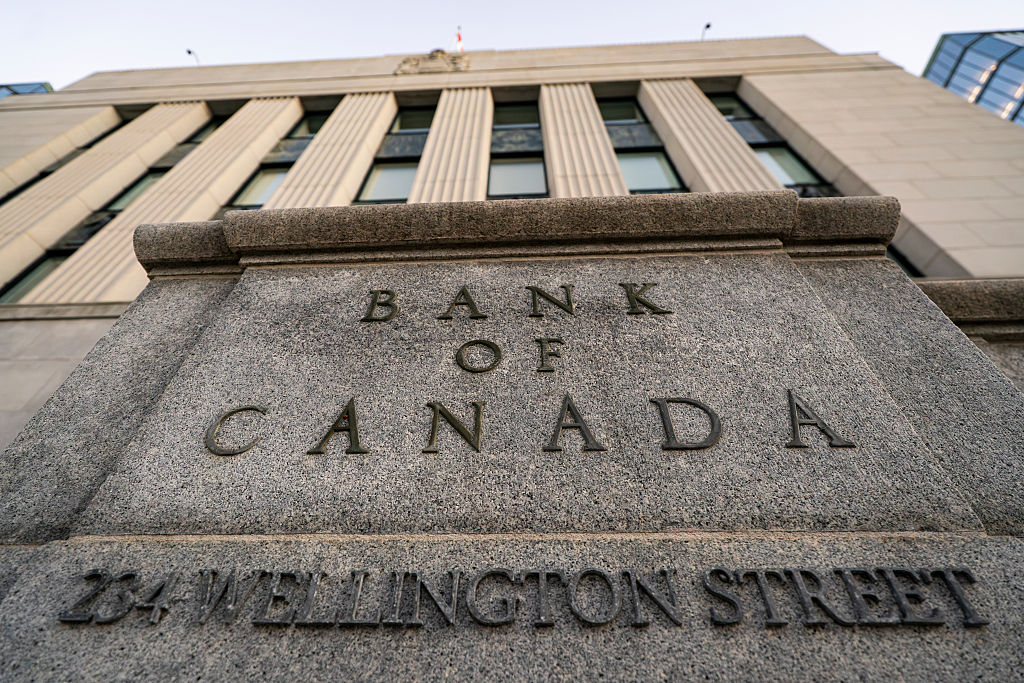
The Bank of Canada announced that its benchmark interest rate stayed unchanged at 2.25 per cent, extending a months-long pause as policymakers continue balancing a weak economy against renewed inflation pressures. The Bank of Canada has now announced unchanged benchmarks for the last five months, but the news comes as Canadians face conflicting economic signals. While economists noted that Canada could be in a technical recession following two consecutive quarters of economic contraction, rising energy prices and persistent inflation have impacted the central bank's ability to provide relief through lower interest rates. Governor Tiff Macklem said the bank remains prepared to respond if inflation pressures become more entrenched.
The unchanged rates did not come as a surprise to economists or financial markets. Most analysts predicted the central bank would keep rates unchanged after holding them at 2.25 per cent throughout 2026. Since completing a series of rate cuts in 2024 and 2025, the Bank of Canada has largely adopted a wait-and-see approach, not willing to commit to anything. Officials have argued that current interest rates sit near a neutral level, meaning they neither significantly stimulate nor restrict economic activity. The June 10 announcement signals that policymakers still believe the current rate remains appropriate despite mounting economic uncertainty.
The economy is weak, but not clearly in recession
-Bank of Canada
Canada's economy struggling
Even with mortgage rates staying steady, Canada's economy continues to struggle. Recent data showed the country has slipped into a ‘technical recession,' a term economists use to describe two consecutive quarters of economic contraction. Businesses continue struggling due to global market uncertainty and the Canada-US trade war. Individual households also remain under financial pressure due to the general economic situation in Canada and across the globe. Although employment data improved in recent months and unemployment has fallen from earlier highs, and economic growth remains weak. While some of those conditions would normally strengthen the case for interest rate cuts, central bankers fear reducing rates too quickly could fuel another wave of inflation and undo progress made over the past two years.
Macklem acknowledged the difficult balancing act facing policymakers, claiming that there is ‘little evidence' that higher energy prices have spread broadly throughout the economy. Officials believe rising gasoline costs have primarily increased inflation through higher fuel prices rather than through widespread increases across goods and services. That distinction remains critical for policymakers. If energy costs begin to influence wages, transportation expenses, and consumer prices more broadly, the bank could face pressure to raise rates again. For now, however, officials believe they have time to assess how those risks evolve.
Global events impacting banks outlook
Global events are certainly influencing the Bank of Canada's decisions on whether or not to raise interest rates. Policymakers are continually highlighting uncertainty in energy markets, global geopolitics, and trade relations with the US. The upcoming review of the Canada-United States-Mexico Agreement is another source of concern for the Bank of Canada and economists. New tariffs and trade restrictions can further weaken Canada's economy, impacting interest rates for Canadian homeowners. At the same time, further increases in oil prices could add inflationary pressure and make rate cuts even more difficult to justify. Those competing risks have reinforced the bank's cautious approach.
What's next?
Canadian economists are divided over what comes next. While some analysts believe The Bank of Canada may still cut rates if Canada's economy weakens further, others do not. Some argue that inflation risks remain significant, and the central bank will eventually be forced to raise benchmark rates. Nathan Janzen, assistant chief economist at RBC, expects policymakers to remain patient in a statement to Global News. Most major financial institutions currently expect rates to remain unchanged through the remainder of 2026.
You'll see gradual improvement in the per-person economic backdrop this year,
-Nathan Janzen
For Canadian homeowners, businesses and consumers, the stagnant interest rates mean borrowing costs will remain unchanged for now. Variable-rate mortgages, lines of credit, and other lending products that are closely tied to the Bank of Canada's policy rate will not see immediate changes. That being said, uncertainty surrounding the future remains high. The central bank has made it clear that it remains prepared to move rates in either direction depending on how inflation, economic growth and global events develop. For now, policymakers appear content to stay on the sidelines, watching closely as Canada's economy navigates an increasingly uncertain environment.
 Is Canada in a recession? Here's what experts say