

/https%3A%2F%2Fcdn-tor.buminteractif.com%2F2026%2F09%2F18202632%2FGettyImages-144098444.jpg)
According to CTV, Canada will increase its focus on its Arctic regions, and it isn't alone; its new EU allies want to take part. In an investigative piece published by CTV, reporters aboard Canadian Coast Guard icebreaker Des Groseillier got the inside story on just how much help European allies are providing in terms of Arctic defence. While speaking in Strasbourg, France, on September 17, Mark Carney and UN Committee President Ursula von der Leyen spoke about the issues the EU and Canada have a shared interest in, and the Arctic region is right at the top of the list.
Shared interest in the Arctic
Mark Carney put it almost poetically in his speech in Strasbourg, stating that while Canada is not physically in Europe, it does share a 3,000-kilometre border in the Arctic. Arctic defence has been a priority for Mark Carney's government since its inception in 2025, and there are a couple of reasons. The Arctic regions of Canada, Greenland, and Russia are among the lands with the highest potential. As climate change continues to impact the planet, and global temperatures are undisputedly rising, Arctic regions may become some of the best arable farming land in the world.
You've seen our ‘Our North, Strong and Free' defence policy update state categorically that Arctic security is the most pressing defence priority.
Major-General Scott Clancy, former deputy commander of NORAD
It is clear that for Canada, Arctic security has become a priority. The country has made more than three billion dollars in investments, including the construction of new bases. Canada has purchased six new Arctic and offshore vessels, and six new polar icebreakers to bolster what Des Groseillier crew members call an aging and inadequate fleet. In terms of new infrastructure, Carney has thrown billions of dollars into the building of two new Arctic Support Hubs in Whitehorse and Resolute, and Northern Operational Support Nodes in Cambridge Bay and Rankin Inlet. Canada has also invested in four new long-range radar sites and an intelligence hub in Iqaluit.
Canada and the EU
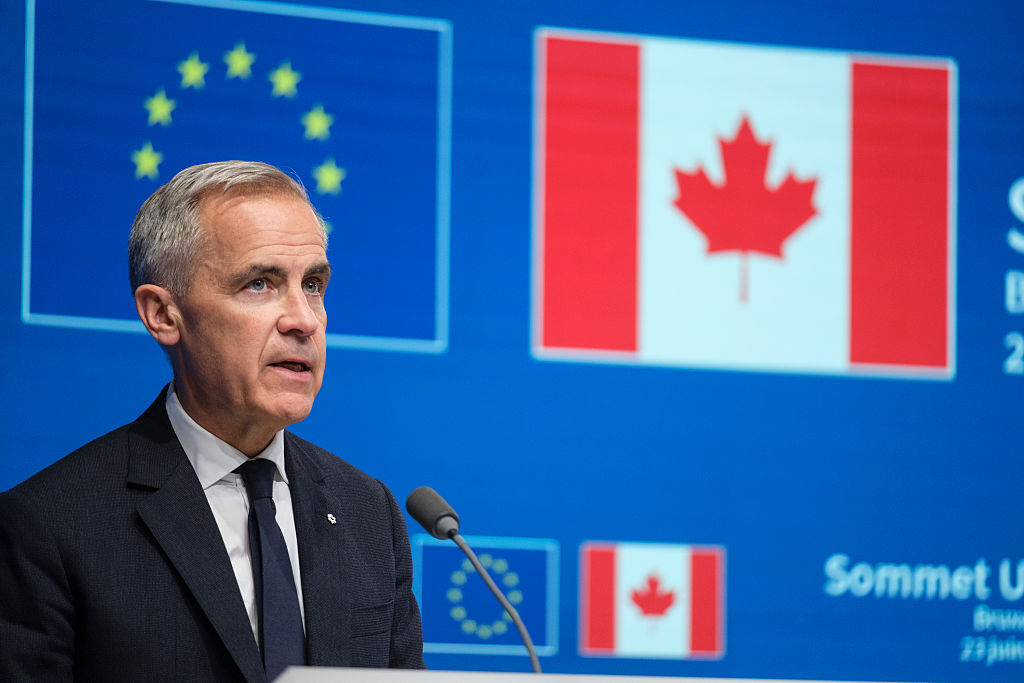
Canada is ambitiously pursuing becoming the European Union's first associate member, according to Mark Carney during an overseas trip geared to deepening ties across the Atlantic. Rumours have been swirling for months that Canada and the EU are debating whether it is feasible for Canada to become the first country outside the European continent to achieve EU member status. Since Canada is geographically located in North America, the country would become an “associate member”, but would still enjoy the benefits allotted to EU member states. While addressing the European Parliament on September 17, in Strasbourg, France, Carney responded to an offer that was made by EU Commission President Ursula von der Leyen.
On September 16, 2026, EU Commission President Ursula von der Leyen officially extended an offer to Canada, inviting the North American country to become the EU's first ‘associate member'. The unprecedented offer came after Carney spent the last year travelling across Europe and Oceania, in hopes of forming ties with ‘middle powers' amid Donald Trump's trade war with Canada. Canada's loss of its largest trading partner and free trade agreement has resulted in the country looking elsewhere for meaningful trade ties, and it appears the work has not been in vain, as Canada could become the first non-European country to enter the EU.
According to von der Leyen, Canada and the EU see the world through the same eyes, meaning their values and geopolitical ideologies are in sync amidst global political turmoil. Von der Leyen claimed that Canada and the EU are closely aligned on many big issues, including AI, climate change, and Russia's invasion of Ukraine. While speaking alongside Mark Carney in Strasbourg, von der Leyen claimed that the EU wants to bring its relationship with Canada to the highest possible level, hinting at long-term trade agreements and official partnerships.
We want to bring the relationship with Canada to the highest level possible. We must urgently reimagine our partnerships. So, I would like to work with [Canada] on opening the door for Canada to be the first associate member of the EU.
Ursula von der Leyen
While Mark Carney and Von der Leyen both made the idea seem like a no-brainer, it quickly came out that neither of them had briefed the appropriate parties. In the EU, multiple major capitals commented with confusion on the announcement, and Germany has informally come out against the idea. In Canada, the bombshell hasn't gone over well with the opposition, Pierre Poilievre. Poilievre cited Carney's comments from less than a week earlier, saying he did not plan to push to join the EU. If Carney could successfully get Canada EU associate membership, it would be an incredible success for the first-time politician.
