Trump Says Iran Could «Take Out» Los Angeles and San Diego, Prompting Fierce Backlash


/https%3A%2F%2Fcdn-tor.buminteractif.com%2F2026%2F10%2F06175004%2Ftrump-getty-435345dfgdf.jpg)
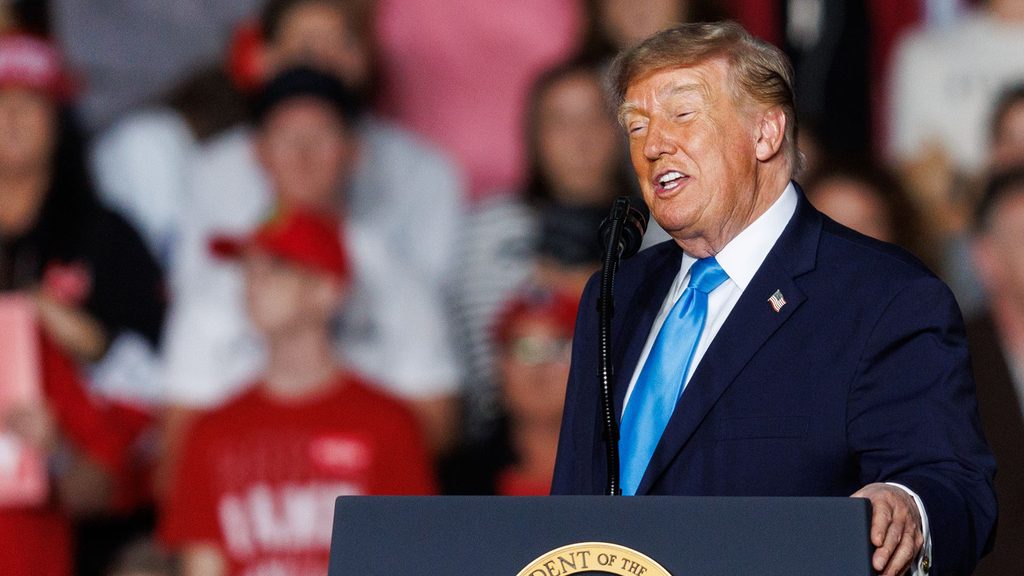
Donald Trump sparked swift backlash during a campaign rally in Nebraska after suggesting that Iran could «take out» Los Angeles or San Diego while defending the costs associated with the ongoing war. The remarks, delivered October 5 in Grand Island as Trump campaigned ahead of the November midterms, immediately drew condemnation from California leaders and other political figures who interpreted them as treating American cities as expendable. Governor Gavin Newsom, Los Angeles Mayor Karen Bass and San Diego Mayor Todd Gloria were among those responding publicly, while criticism also came from figures outside California's Democratic leadership. The White House subsequently rejected the interpretation that Trump was inviting an Iranian attack, saying he was instead describing the danger American cities could face if Iran possessed nuclear weapons.
Trump made the comments while discussing economic pressures connected to the Iran war, including higher costs that have become an increasingly significant political issue ahead of the midterms. Addressing supporters in Nebraska, he sought to portray those disruptions as temporary and justified by what he described as the broader objective of protecting the United States and the world. «And again, remember, with the war, it's just artificial. It's a little bit high. It's a small price to pay for keeping the world safe, keeping our country safe.» Trump then abruptly shifted from economic consequences to the possibility of an attack on an American city, saying: «They can take out a city. Let them take out Los Angeles. Let them take out San Diego. That's, this is a small price to pay, and it's gonna be over very soon.» His comments immediately became the focus of criticism because they followed his characterization of the war's consequences as a relatively limited sacrifice.
«Donald Trump's remarks were dangerous — if not treasonous — putting a target on two of our biggest cities and one of America's largest naval hubs. I am directing the State Threat Assessment Center to actively monitor the situation in the event that foreign actors interpret the President's remarks as an invitation to target California.»
-California Governor, Gavin Newsom
The reference to two major California cities produced an immediate response from Governor Gavin Newsom, who initially wrote: «After sending the National Guard and Marines to occupy California, Donald Trump is now saying our foreign enemies should “take out” Los Angeles and San Diego. He is deranged and dangerous.» Newsom later escalated his response, arguing that Trump's words could have security consequences rather than dismissing them simply as provocative political rhetoric. «Donald Trump's remarks were dangerous — if not treasonous — putting a target on two of our biggest cities and one of America's largest naval hubs. I am directing the State Threat Assessment Center to actively monitor the situation in the event that foreign actors interpret the President's remarks as an invitation to target California.» The concern carries particular significance in San Diego because of the region's extensive U.S. military presence.
The backlash quickly extended beyond Newsom. Los Angeles Mayor Karen Bass accused Trump of crossing a dangerous line by invoking her city while discussing a foreign adversary. «The President of the United States suggested that a foreign government attack Los Angeles. His statements against our city are dangerous and could potentially compromise our safety. The role of a president is to protect the country, not to actively threaten it and encourage attacks on American lives. In the face of irresponsible threats, as Angelenos, we know how to stand together and protect our city.» San Diego Mayor Todd Gloria delivered a similarly direct response: «San Diego is not collateral damage. We are not expendable. And we are never a “small price to pay.” Keep our city out of your reckless war talk.» The criticism was not confined to those two mayors, with Trump's wording drawing broader objections over the suggestion that any American population could be discussed in such terms during wartime.
National political figures and prominent Californians also joined the criticism. Senator Bernie Sanders connected Trump's comments directly to the human cost of the conflict, writing: «I can't believe we have to say this, but the annihilation of two major American cities — more than 5 million people — is not a “small price to pay” for Trump's illegal war. Neither are the 19 American troops and 3,000+ Iranians who lost their lives. Our president is unhinged.» Maria Shriver similarly argued that the controversy should concern Americans far beyond California: «This should outrage every American. This is the president of the United States telling Iran to bomb American cities. I live in Los Angeles, but that's beside the point. Tommorow it could be your city. My fellow Americans, this is not normal. This is not funny. This behavior should ring alarm bells for us all!» Republican congressional candidate Jim Desmond also rejected the notion that an American city could be considered expendable, giving the backlash a dimension beyond Democratic officials.
«And again, remember, with the war, it's just artificial. It's a little bit high. It's a small price to pay for keeping the world safe, keeping our country safe. They can take out a city. Let them take out Los Angeles. Let them take out San Diego. That's, this is a small price to pay, and it's gonna be over very soon.»
-U.S. President, Donald Trump
The White House pushed back against those interpretations, characterizing the reaction as a media-driven controversy and maintaining that Trump was not encouraging Iran to strike California. According to the administration's explanation, Trump was presenting a hypothetical scenario intended to illustrate what could happen if Iran were permitted to acquire nuclear weapons, making his references to Los Angeles and San Diego a warning about the threat he says his military policy is designed to prevent. That explanation places the President's remarks in a substantially different context from the interpretation offered by Newsom, Bass, Gloria, Sanders and others. Yet the controversy centers on Trump's actual choice of words — «Let them take out Los Angeles. Let them take out San Diego» — and their proximity to his description of wartime economic consequences as «a small price to pay.» With Newsom ordering California's State Threat Assessment Center to monitor whether foreign actors interpret the remarks as an invitation to target the state, the political dispute has now developed into a stated security concern for California officials.
Created by humans, assisted by AI.
 Trump faces shocking never-seen-before midterm numbers as 82% disapprove on cost of living
 Days after Trump welcomes Xi, months-long China-linked campaign targeting US AI and military tech exposed