U.S. Military Confirms Weapons in Space as It Prepares for Threats «Wherever They Exist»


/https%3A%2F%2Fcdn-tor.buminteractif.com%2F2026%2F09%2F15185034%2Fspace-force-us-trump-getty-345345fgdf.jpg)
In a historic shift in modern warfare policy, the U.S. military has publicly confirmed that it has operational weapons deployed in Earth's orbit, marking the first official acknowledgment by Washington of active on-orbit space-control weapons. Air Force Secretary Troy Meink revealed the capability on September 14 during the Air, Space and Cyber Conference in National Harbor, Maryland, presenting the disclosure as a response to increasingly sophisticated dangers facing American military assets beyond Earth. «Today we continue to ensure we remain ready to meet the challenges of evolving threats wherever they exist», Meink told the gathering. He then made the confirmation explicit: «This is why the United States now has on-orbit space control weapons capable of defending the joint force against hostile adversary action.» The announcement also served as an unmistakable strategic signal as the United States confronts rapidly advancing Chinese and Russian military capabilities in a domain increasingly considered essential to modern warfare.
Exactly what those operational weapons can do remains largely classified, leaving significant questions about how many systems are already in orbit and the specific technologies they employ. The military has nevertheless outlined a broader architecture combining kinetic and non-kinetic capabilities that can support defensive as well as offensive space-control operations. Among the major programs under development is the Space-Based Interceptor initiative, envisioned as an orbital layer capable of intercepting dangerous missiles, including sophisticated ballistic and hypersonic threats. Another component is the Space-Based Air-Moving Target Indication constellation, intended to improve the military's ability to detect and continuously track complex, rapidly moving targets from orbit. Space Force officials have described the broader space-control mission as potentially employing multiple methods, ranging from electronic disruption and jamming to kinetic interception. Taken together, the emerging architecture demonstrates how dramatically the military role of satellites is expanding beyond communications, navigation and intelligence toward systems capable of directly affecting an adversary's ability to fight.
«Today we continue to ensure we remain ready to meet the challenges of evolving threats wherever they exist.»
-Air Force Secretary, Troy Meink
The acknowledgement also fits directly into President Donald Trump's increasingly ambitious effort to establish American military superiority in space, building on his creation of the U.S. Space Force in 2019 and his more recent push for the massive Golden Dome missile-defence architecture. Trump has promoted the project as a multilayered shield capable of protecting the United States against ballistic, intercontinental and hypersonic weapons, with space-based interceptors envisioned as a critical orbital component capable of engaging threats extremely early in their flight. But Trump has made clear that he does not view the emerging architecture exclusively as defensive, describing it as «a very, very big part of our defense and, obviously, of our offense». Defense Secretary Pete Hegseth has similarly pushed contractors and military leaders toward what his strategy describes as «orbital dominance», arguing that «urgency is the new currency» as rival powers expand their own capabilities. Hegseth has presented the broader integrated military architecture in even more sweeping terms, saying the United States «will be able to strike anywhere, anytime».
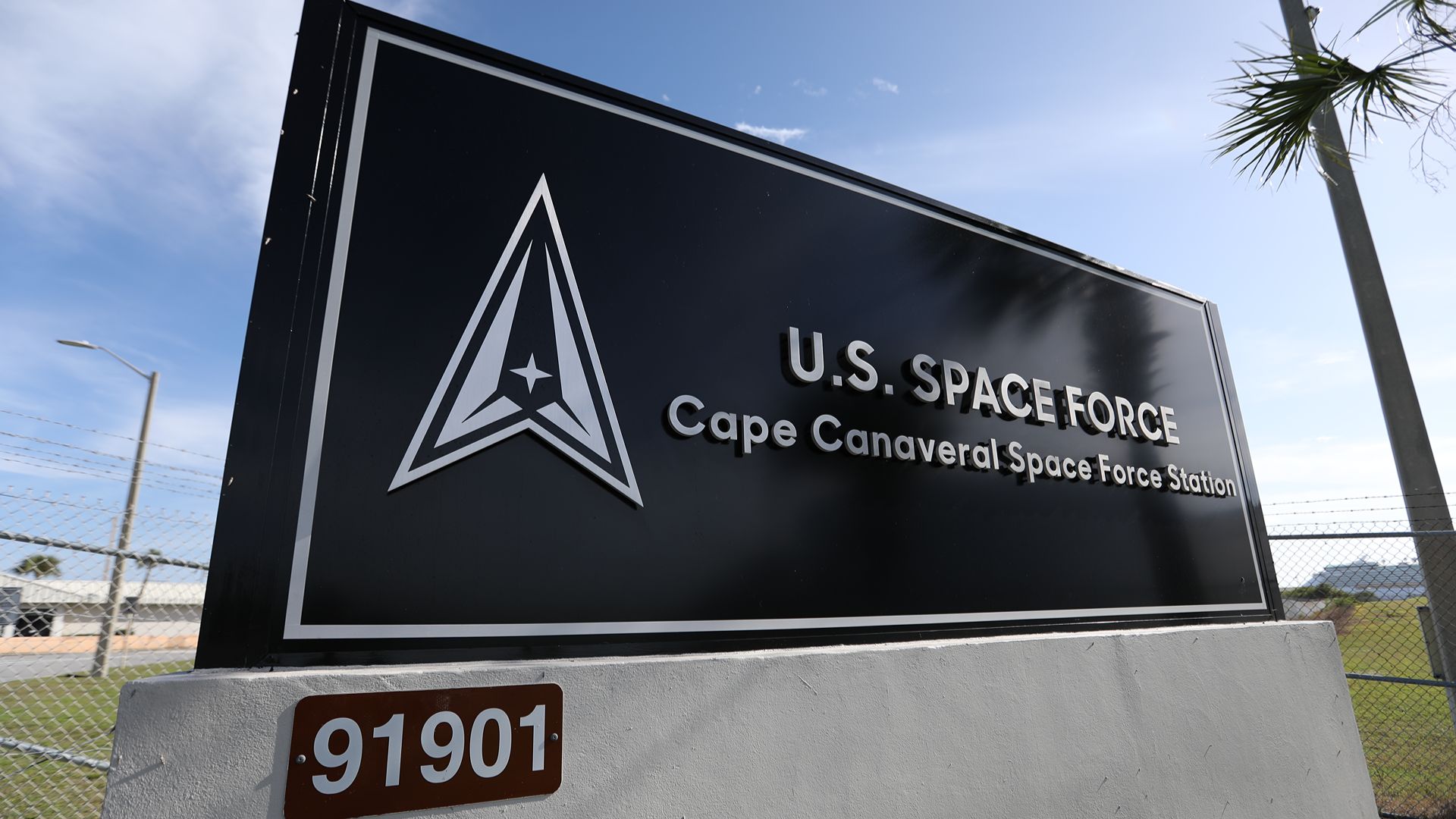
The urgency surrounding the new orbital architecture reflects a growing military competition in space, particularly with China and Russia, both of which Washington views as capable of threatening the satellites on which American forces increasingly depend. Modern military operations rely heavily on orbital systems for missile warning, surveillance, communications, navigation and targeting, meaning an attack against satellites could disrupt forces operating thousands of miles away on Earth. That vulnerability is helping transform space from a largely supporting domain into an increasingly active component of military planning. The newly acknowledged «on-orbit space control weapons» are intended to provide the United States with options for protecting those assets against «hostile adversary action», according to Meink. Their existence also sends a deterrent message: Washington is publicly signaling to potential adversaries that attempts to disable American space infrastructure could now encounter an active military response in orbit rather than simply defensive measures conducted from the ground.
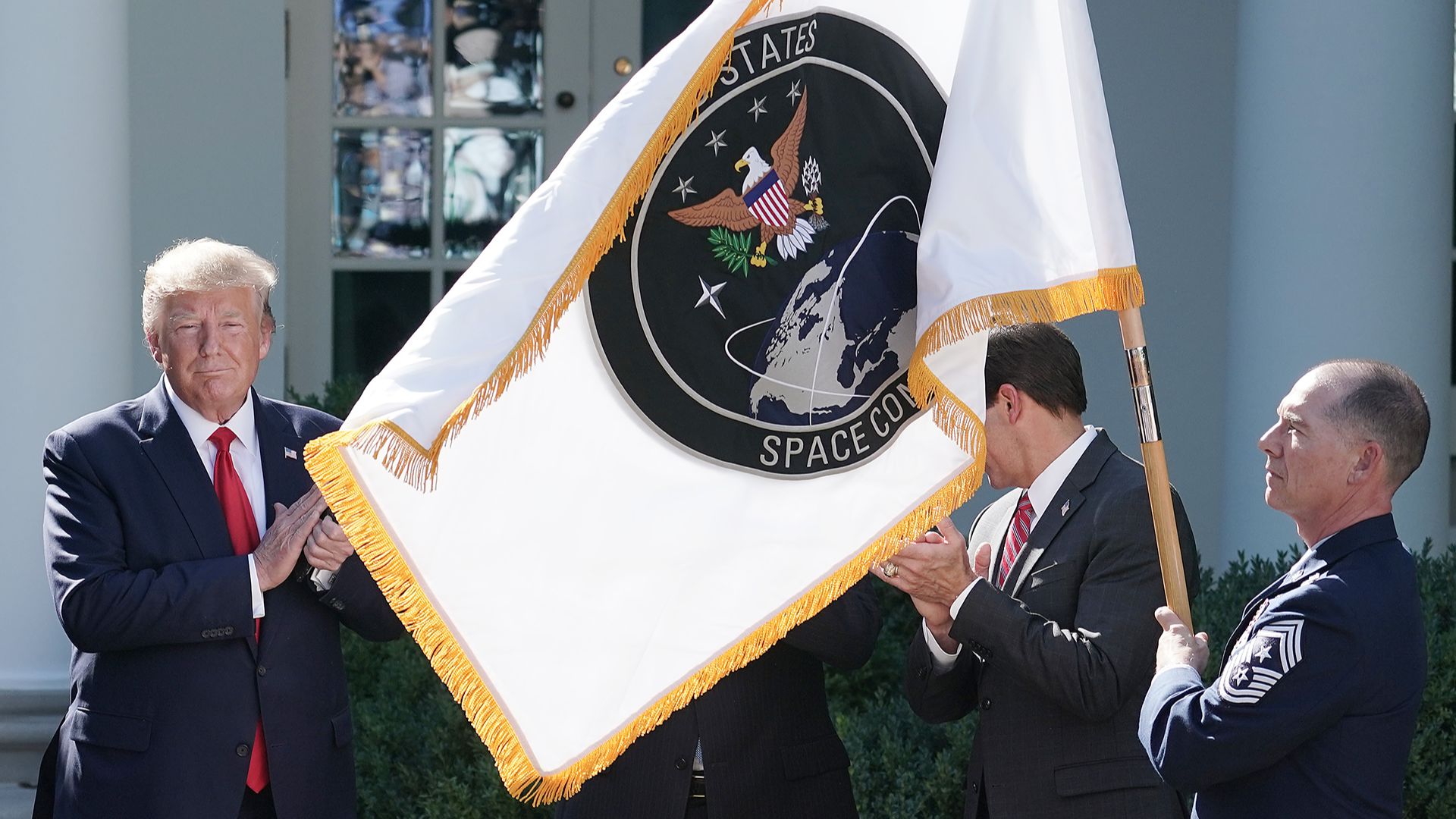
The growing importance of space-based infrastructure has already been demonstrated during recent U.S. military operations, including Operation Epic Fury against Iran, where American space tracking capabilities played a major role in detecting and responding to incoming missile threats. U.S. systems helped military forces identify launches, follow missile trajectories and coordinate defensive responses, contributing to the reported neutralization of more than 90% of incoming counter-offensive missile threats. That experience reinforced the Pentagon's argument that orbital capabilities are no longer peripheral tools but essential components of battlefield operations on Earth. The newly disclosed weapons take that evolution considerably further. Rather than merely observing threats and passing information to forces below, future layers of the architecture are designed to give the military the ability to directly interfere with or destroy certain threats. That concept aligns with Hegseth's assertion that an integrated American military architecture «will be able to strike anywhere, anytime», illustrating the increasingly blurred boundary between defensive space infrastructure and offensive warfighting capabilities.
«This is why the United States now has on-orbit space control weapons capable of defending the joint force against hostile adversary action.»
-Air Force Secretary, Troy Meink
The public acknowledgment therefore represents more than the disclosure of another classified military capability. It marks a significant change in how openly the United States describes space as a potential battlefield and raises broader questions about where the accelerating competition for orbital military superiority could lead. Washington maintains that the newly acknowledged systems are necessary to protect American and allied forces as adversaries develop increasingly sophisticated anti-satellite, missile and hypersonic capabilities. Yet the same technologies could intensify an emerging arms race as rival powers respond to U.S. deployments with additional systems of their own. For decades, much of America's most sensitive military activity in orbit remained deliberately obscured, even as satellites became indispensable to warfare. Meink's announcement breaks through part of that secrecy. By declaring that the United States now possesses «on-orbit space control weapons», the military is openly warning adversaries that American forces are preparing to defend themselves across every domain — consistent with Meink's pledge to confront evolving threats «wherever they exist».
Created by humans, assisted by AI.
 Elon Musk rages against documentary and mother of his child as ‘Musk' premieres at Venice
 Three Anthropic AI researchers resign, sounding grim warning it could ‘kill us all by the end of the decade'